
When people compare a poly bag with a plastic bag, they are often comparing a specific material with a general category. The two terms can describe products that look similar, but the film type, stiffness, clarity, seal behavior, and intended use may be very different.
That distinction matters when packaging must protect a product through filling, storage, picking, and shipping. The wrong material can create punctures, poor presentation, sealing problems, or unnecessary packaging cost. The right material can make packing more consistent while giving the product the protection and appearance it needs.
This guide explains the difference between poly bags and other plastic bags, compares the main materials and formats, and provides a practical way to choose the right option for your business.
What Is the Difference Between a Poly Bag and a Plastic Bag?
Plastic bag is the broad term. It can refer to almost any flexible bag made from a plastic polymer, including polyethylene, polypropylene, PVC, or a certified compostable material.
Poly bag normally means a bag made from polyethylene, abbreviated as PE. The most common PE film families are LDPE, LLDPE, and HDPE.
Poly bags are a type of plastic bag, but the phrase plastic bag does not identify one specific resin.
| Term | Meaning | Why the distinction matters |
|---|---|---|
| Poly bag | A flexible polyethylene bag | Usually selected for flexibility, moisture protection, scalable production, and cost control |
| Plastic bag | A general category covering bags made from several polymers | Performance depends on the exact resin and film construction |
A buyer should therefore avoid approving a quote based only on the words “poly bag” or “plastic bag.” The purchase specification should also state the resin, thickness, dimensions, closure, print, and required performance.
What Makes Poly Bags Different?
Polyethylene is popular because it can be engineered across a wide range of flexibility, clarity, thickness, and strength. The same basic resin family can be converted into a thin inner bag, a printed mailer, a gusseted liner, or a heavy-duty industrial bag.
LDPE Poly Bags
Low-density polyethylene, or LDPE, is soft, flexible, and commonly available with good clarity. It is often used for clothing, retail products, food packaging, liners, and products that need to be handled without scratching.
LLDPE Poly Bags
Linear low-density polyethylene, or LLDPE, is valued for stretch and puncture resistance. It may be used alone or blended with LDPE when a bag must tolerate heavier or more irregular contents.
HDPE Poly Bags
High-density polyethylene, or HDPE, is generally stiffer and stronger for its thickness than softer PE films. It is common in produce bags, lightweight liners, merchandise bags, and applications where a crisp feel is useful.
The right PE grade is not determined by thickness alone. A resin blend, seal design, and bag geometry can change performance significantly.
What Types of Plastic Bags Are Not Poly Bags?
Some plastic bags are made from polymers other than polyethylene. These materials can be useful when the product needs a particular appearance, stiffness, barrier, or end-of-life route.
Polypropylene Bags
Polypropylene, or PP, is often clearer and stiffer than PE. It can be a good choice for bakery items, apparel presentation, stationery, cards, and retail products where the package should look crisp and transparent.
BOPP Bags
Biaxially oriented polypropylene, known as BOPP, provides high clarity, gloss, and print presentation. BOPP is commonly used as one layer of printed food, snack, and retail packaging rather than as a simple loose bag in every application.
PVC Bags
PVC can provide clarity and form for specialty packaging, but its suitability depends on the application, market requirements, and environmental policy. It should not be treated as a direct replacement for PE without checking product compatibility and disposal expectations.
Compostable and Biodegradable Bags
Compostable bags are made for specific composting conditions and should be supported by the relevant certification and collection system. “Biodegradable” is a broader claim and does not automatically mean a bag will break down in a landfill or be accepted by a local composting facility.
These bags are still plastic-based packaging in many cases, but they should be specified by certified material, intended environment, and disposal route rather than by the word eco-friendly alone.
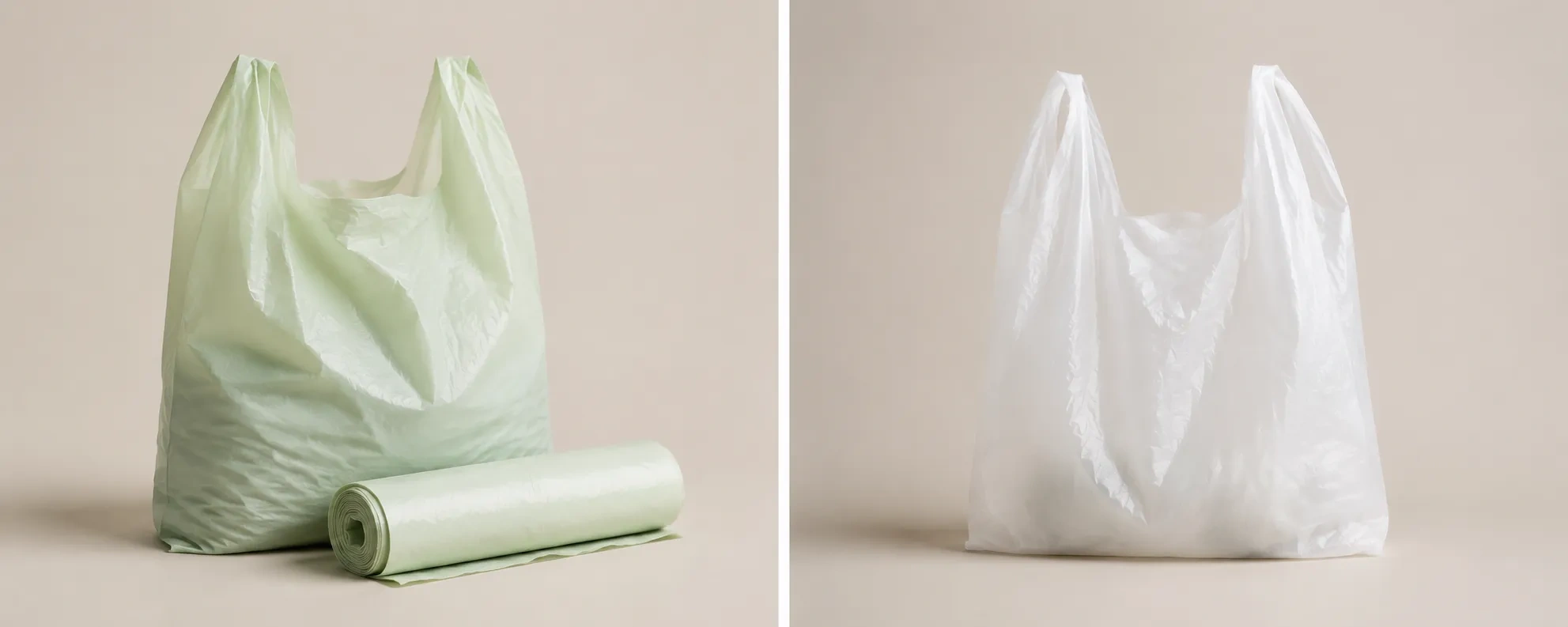
What Are the Common Forms of Poly Bags?
Polyethylene film can be converted into different bag formats to match the product and packing process.
- ➔Flat poly bags: Simple open-top bags for manual packing, inner protection, and small components.
- ➔Ziplock bags: Resealable bags for products that may be opened and closed more than once.
- ➔Gusseted bags: Bags with expandable sides or bottoms for bulky products and larger volumes.
- ➔Poly mailers: Lightweight self-sealing shipping bags for e-commerce orders and soft goods.
- ➔Wicketed or roll bags: Pre-opened bags supplied for faster manual or automated packing.
- ➔Heavy-duty liners: Thick PE bags for drums, totes, cartons, pallets, and industrial materials.
- ➔Printed poly bags: Custom bags with branding, instructions, warnings, or product identification.
Bag style changes how the film carries the load. A gusset may improve volume, a stronger bottom seal may support dense contents, and a resealable closure may improve reuse. These design choices should be evaluated together with the resin and thickness.
What Are the Advantages of Poly Bags?
Poly bags are widely used in manufacturing, retail, food, electronics, logistics, and e-commerce because they combine several practical benefits.
- ➔Flexible protection: PE film can wrap products closely without adding much bulk.
- ➔Moisture and dust resistance: A properly sealed bag helps protect contents during storage and transport.
- ➔Adjustable strength: Thickness and resin blends can be selected for light or heavy applications.
- ➔Low shipping weight: Flexible PE packaging can reduce the weight added to an order.
- ➔Efficient production: Bags can be made in bulk, on rolls, wicketed, or for automated packing.
- ➔Brand flexibility: Sizes, colors, finishes, closures, and custom printing can be tailored to the product.
Poly bags are not automatically the best choice, but they are often the most practical starting point for flexible protection and shipping.
What Are the Advantages and Limitations of Other Plastic Bags?
Other plastic materials may be better when PE does not provide the desired appearance or barrier.
| Material | Potential Advantage | Possible Limitation |
|---|---|---|
| PP or BOPP | High clarity, stiffness, gloss, and print presentation | Can be less soft or less forgiving than PE for irregular products |
| PVC | Clarity and form for selected specialty applications | May face application, policy, or disposal restrictions |
| Compostable film | Can support a certified composting program | Often requires specific conditions and may cost more |
| Multilayer laminate | Improved moisture, oxygen, aroma, grease, or light protection | More complex material structure and recycling considerations |
The most suitable material depends on the product, shelf life, packing equipment, appearance, regulations, and local recovery system. A material that performs well in one application may be inefficient or unsuitable in another.
Poly Bag vs. Plastic Bag: Which Is Better for Your Business?
There is no universal winner. The right choice depends on what the package must do.
| Decision Factor | Polyethylene Poly Bag | Other Plastic Bag |
|---|---|---|
| Best general use | Storage, shipping, apparel, components, liners, and industrial protection | Specialty display, high-clarity, barrier, or certified compostable applications |
| Flexibility | Usually soft and adaptable to product shape | Ranges from flexible to stiff depending on polymer |
| Clarity | Good clarity is available, especially with LDPE | PP and BOPP can provide a crisper display |
| Moisture protection | Strong choice for ordinary storage and shipping | Depends on the polymer and laminate |
| Cost control | Often efficient for high-volume packaging | May cost more when specialty resin or processing is required |
| End-of-life | Recycling depends on clean film collection and local acceptance | Recovery route varies widely by material and location |
For most manufacturers, distributors, and online retailers, a PE poly bag is a strong choice when the priority is flexible protection, low packaging weight, scalable production, and custom sizing. A different plastic structure may be justified when clarity, shelf life, or a certified composting route is more important.
How Do You Select the Right Bag Material?
1. Match the Material to the Product
Check the product’s weight, surface, moisture sensitivity, temperature, and expected shelf life. Smooth dry products and heavy irregular parts should not be placed in the same default bag specification.
2. Match the Bag to the Packing Process
Manual packing, heat sealing, zipper closure, automatic filling, and roll-fed equipment each place different demands on the film. Confirm sealing temperature, coefficient of friction, opening behavior, and bag dimensions when a machine is involved.
3. Match the Appearance to the Sales Channel
Shipping protection may only require a durable opaque mailer. A retail product on a shelf may need high clarity, a printed design, a matte finish, or a window that displays the contents.
4. Match Sustainability Claims to Real Disposal
Use recyclable, recycled-content, compostable, or biodegradable claims only when the material and local collection system support them. Ask for the relevant certification and confirm whether the destination facility accepts the package.
5. Approve Samples Before Full Production
Review the sample for fit, seal strength, appearance, filling speed, and performance after handling. Testing the actual product is more reliable than choosing a bag from a material name alone.
Poly Bag vs. Plastic Bag FAQs
Are poly bags and plastic bags the same?
They are related but not identical terms. A poly bag generally means a polyethylene bag, while plastic bag is a broader term covering bags made from several polymers.
Are poly bags recyclable?
Some clean polyethylene film can be recycled through designated film collection programs. Acceptance varies by location, and used or contaminated bags are not automatically accepted in curbside recycling.
Which is stronger, PE or PP?
Neither is always stronger. PE is often more flexible and forgiving, while PP can be stiffer and clearer. Strength depends on resin grade, thickness, orientation, seals, and bag design.
Are compostable bags plastic bags?
Many compostable bags are made from polymer-based materials. Their disposal requirements are different from conventional PE bags, so certification and local composting acceptance should be checked.
What is the best bag for e-commerce shipping?
Poly mailers are commonly selected for clothing, soft goods, and lightweight e-commerce orders because they are light, flexible, moisture-resistant, and easy to seal. Products with sharp corners or greater weight may need a thicker mailer or additional inner protection.
Custom Poly Bags and Plastic Packaging from Mille Container
Mille Container supplies custom poly bags and plastic packaging for food, retail, e-commerce, electronics, agriculture, and industrial products. Our options include flat bags, ziplock bags, poly mailers, gusseted bags, stand-up pouches, industrial liners, compostable bags, paper bags, and printed packaging film.
Tell us your product dimensions, filled weight, material preference, protection requirements, artwork, and order quantity. We can help you compare PE and other plastic structures, develop samples, and select a bag that balances performance, appearance, and cost.