
Compostable vs biodegradable packaging bags are often discussed as if they were interchangeable alternatives to conventional plastic bags. They are not the same. The two terms describe different levels of evidence, different disposal conditions, and different expectations for what remains after a bag material breaks down.
The distinction matters when choosing stand-up pouches, flat bags, food bags, shopping bags, mailers, waste liners, flexible films, or paper bags. A bag material may be technically biodegradable but take an undefined period to break down. A certified compostable packaging bag may disintegrate under controlled industrial conditions but remain largely unchanged in a home compost pile. A clean paper bag may be capable of composting, yet recycling it may preserve more of its fiber value.
A sound packaging bag decision therefore cannot be based on a green-looking label alone. It should connect bag material, certification, product protection, sealing performance, collection infrastructure, and disposal instructions.
Compostable vs Biodegradable Packaging Bags: The Core Difference
Biodegradable packaging bags are made from materials that microorganisms can break down under particular conditions. Used by itself, the term biodegradable does not necessarily state how long the process takes, which environment is required, or whether the remaining material is suitable for soil.
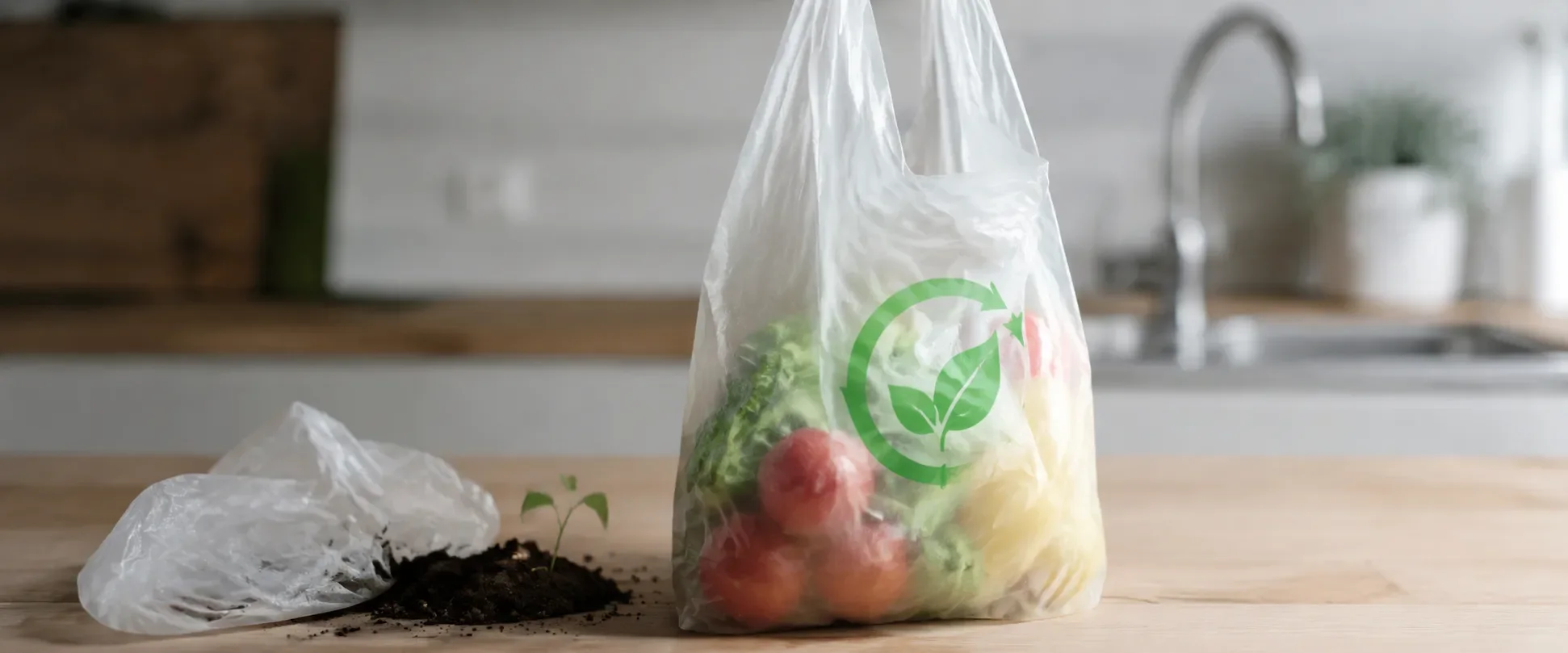
Compostable packaging bags belong to a more specific category. They are expected to biodegrade and physically disintegrate under defined composting conditions without preventing the resulting compost from being used as intended. A credible compostable bag claim should identify the applicable standard, certification, and disposal environment.
This means compostable bag materials form a more controlled category within the broader idea of biodegradability. Compostable packaging bags are biodegradable under the conditions for which they were designed, but packaging bags described only as biodegradable should not automatically be treated as compostable.
| Term | What It Tells You | What It Does Not Guarantee | Disposal Route |
|---|---|---|---|
| Certified compostable | Tested against a defined compostability standard | Acceptance by every composter or suitability for home composting | Industrial or home composting, as specified |
| Biodegradable | Microorganisms can break down the material under certain conditions | A fixed time, a safe residue, or a practical collection route | Depends on the material and verified claim |
| Degradable | The material can fragment or change over time | Biological conversion or freedom from persistent fragments | Follow the verified disposal label |
| Bio-based | Some or all feedstock comes from renewable biological sources | Biodegradability, compostability, or recyclability | Depends on the finished polymer and package |
Defining Compostable, Biodegradable, and Degradable Packaging Bags
Compostable and Certified Compostable Packaging Bags
Composting is a managed biological process. Microorganisms convert suitable organic material into carbon dioxide, water, biomass, and a soil amendment under conditions that control temperature, moisture, oxygen, and processing time. Packaging bags entering this system must do more than become brittle or disappear from view. They need to disintegrate and biodegrade in a way that does not compromise the composting process or the quality of the final compost.
For plastic packaging bags intended for municipal or industrial composting, ASTM D6400 is a commonly referenced specification in North America. EN 13432 is widely associated with packaging bags recoverable through industrial composting and biodegradation in Europe. Certification organizations evaluate products against applicable standards and authorize marks that make the claim easier to identify.
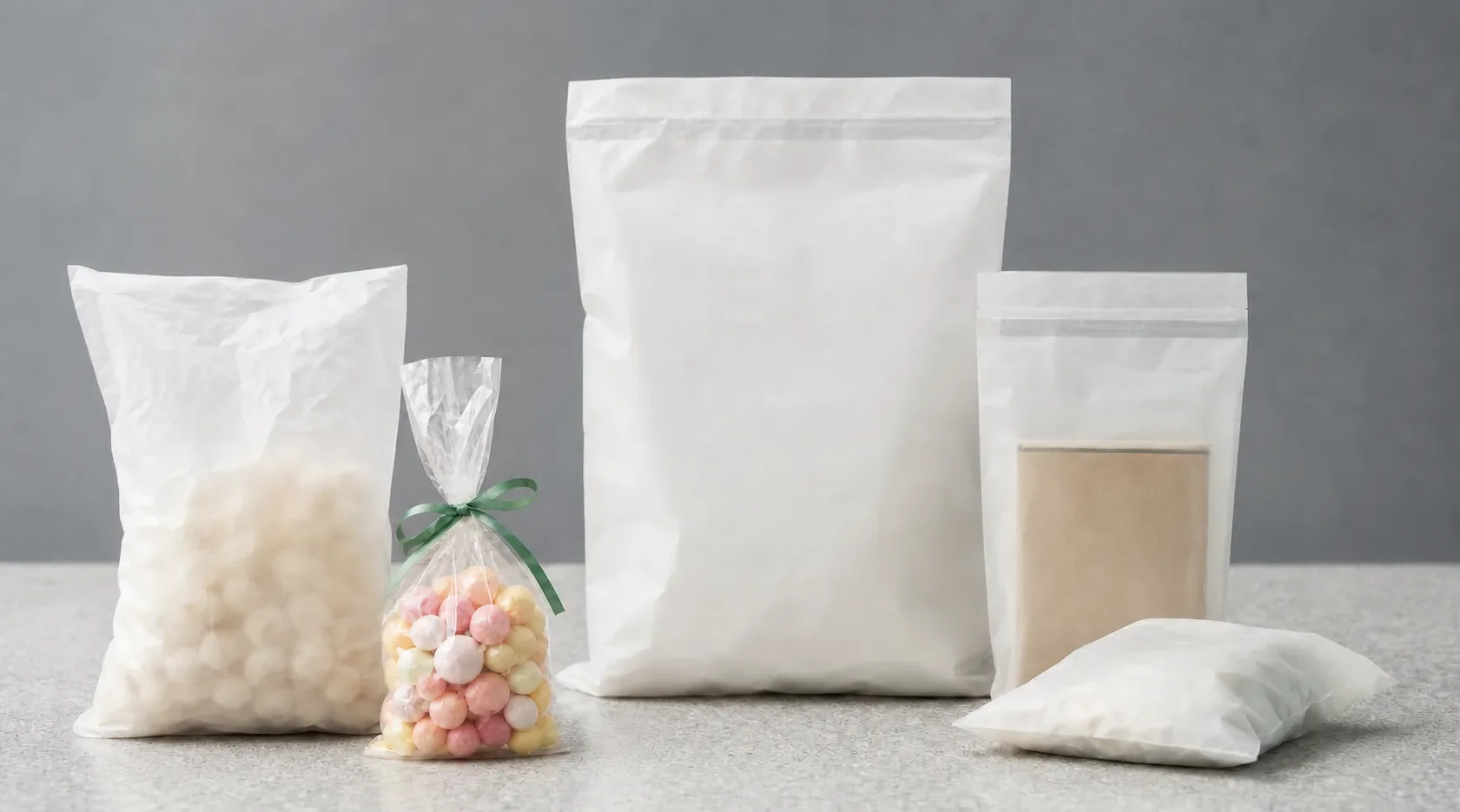
Certification should apply to the finished packaging bag, not only to the base resin. A pouch may contain printing inks, adhesives, coatings, zippers, valves, labels, or sealant layers. Each component can affect whether the complete bag qualifies for the intended claim.
Industrial Compostable vs Home Compostable
Industrial composting facilities operate under controlled conditions that can include sustained heat, regulated moisture, active aeration, and mechanical processing. These conditions are substantially different from a backyard compost pile. Packaging certified for industrial composting should not be labeled or marketed as home compostable unless it has also passed an appropriate home-compostability assessment.
Home composting operates at lower and less consistent temperatures. The result depends on local climate, pile size, moisture, aeration, feedstock balance, and how often the material is turned. For this reason, a home-compostable claim is a separate performance statement rather than a simpler version of industrial compostability.
Even certified compostable packaging bags may not be accepted by every industrial facility. Composters use different technologies and processing cycles, and some programs exclude bags to control contamination from conventional plastic look-alikes. Before selecting a compostable bag, confirm that a realistic collection and processing route exists in the market where it will be used.
Biodegradable Packaging Bags
Biodegradation occurs when microorganisms convert a material into simpler substances. The process depends on the chemistry of the material and the surrounding environment. Temperature, water, oxygen, light, microbial activity, surface area, and material thickness can all change the rate.
The word alone is therefore incomplete. It does not tell a buyer whether a bag biodegrades in soil, seawater, industrial compost, home compost, or another controlled environment. It also does not establish a useful timeframe or confirm that the material leaves no problematic residue.
Landfills are especially poor places to depend on biodegradation. Modern landfills are designed to limit moisture and air movement, which slows many natural decomposition processes. Biodegradable packaging bags should not be selected on the assumption that a general biodegradable claim will make landfill disposal beneficial.
Degradable and Oxo-Degradable Packaging Bags
Degradable is the broadest and least informative of the three terms. A material can degrade through heat, ultraviolet light, oxidation, mechanical stress, or biological action. Breaking a plastic bag into smaller pieces is not the same as converting it into usable compost.
Oxo-degradable plastics use additives intended to accelerate fragmentation when exposed to particular environmental conditions. If the fragments do not subsequently biodegrade completely in a verified process, the result may be persistent small plastic particles rather than a circular end-of-life route.
For packaging bag buyers, an unsupported degradable or oxo-degradable claim is not a substitute for compostability certification or an established recycling route. The bag label should specify the material, applicable test method, expected environment, timeframe, and disposal instructions.
Which End-of-Life Route Is Better for Packaging Bags?
There is no universal answer that makes compostable packaging bags superior to every recyclable bag, or recycling superior for every bag application. The better route is the one that protects the packed product, uses film or paper efficiently, and has a realistic collection and processing system after use.
A practical waste hierarchy begins with avoiding unnecessary packaging, then considers reuse. When single-use packaging is still required, recycling can keep material circulating through additional uses. Composting can be valuable where packaging is closely associated with organic waste, where contamination prevents practical recycling, or where an accepted composting program is specifically designed to receive the item.
For example, a clean mono-material shipping bag may have a credible film-recycling route in some markets. A food-waste liner that helps collect organic waste may make more sense as a certified compostable packaging bag. A high-barrier food pouch containing multiple bonded films may need a different decision because product protection and available processing systems are more complex.
Products labeled degradable without a verified recovery system generally do not create an effective end-of-life plan. Fragmentation should not be confused with circularity, and a landfill claim should not replace reduction, reuse, recycling, or controlled composting.
Plastic and Bioplastic Packaging Bags: Compost or Recycle?
Plastic packaging bags can be recyclable, certified compostable, or intended only for residual disposal. Bioplastic bags add another layer of complexity because the term can describe where a polymer comes from, how it behaves at end of life, or both.
A bio-based polymer is made partly or fully from renewable biological feedstock. It is not automatically biodegradable. Some bio-based plastics are chemically equivalent to conventional recyclable plastics, while other polymers are designed for controlled composting. Conversely, a biodegradable polymer may contain fossil-derived inputs.
How to Identify Compostable Plastic Packaging Bags
Compostable plastic packaging bags and pouches should carry a recognized certification mark and clear language stating whether they are intended for industrial or home composting. The claim should cover the finished bag, including printed areas, seals, closures, and other functional components.
A resin name alone is not sufficient. PLA, PBAT, starch blends, cellulose-based films, and other materials can be used in different structures and thicknesses. Their performance and certification depend on the complete formulation and package design.
After confirming certification, check local acceptance. A technically compostable pouch does not achieve its intended route if the customer has no access to a facility that accepts it. The packaging bag may need region-specific disposal wording instead of one global instruction.
How to Recycle Plastic Packaging Bags
Recyclability depends on bag structure, collection, sorting, processing capacity, and market demand. Many flexible packaging bags are made from multiple bonded layers because the product needs moisture, oxygen, light, aroma, or puncture protection. These laminated pouches can be difficult to recycle through conventional film streams.
Mono-material PE or PP packaging can improve technical recyclability, but technical design is only one part of the answer. Local programs must accept flexible film, the packaging must be clean enough to process, and labels, zippers, inks, coatings, and barriers should be compatible with the intended stream.
Certified compostable plastic packaging bags should not be placed in conventional plastic recycling simply because they look like polyethylene bags. Compostable polymers can contaminate established recycling streams. Follow the disposal mark printed on the bag and do not assume that one item can freely move between recycling and composting.
What to Do With Biodegradable or Degradable Plastic Bags
If a plastic packaging bag only says biodegradable or degradable, look for supporting details. The claim should explain the test standard, environment, timeframe, and expected end result. Without that information, the word provides little help in deciding where the bag belongs.
Do not place the bag in compost unless the finished product is certified and accepted. Do not place it in recycling unless the packaging bag is designed and labeled for the relevant recycling stream. If neither route is verified, disposal with residual waste may be less damaging than contaminating recycling or compost, even though it is not an ideal outcome.
How to Choose Compostable vs Biodegradable Packaging Bags
1. Start With the Available Disposal System
Identify where customers will use the packaging bags and what collection programs they can access. A certified industrially compostable bag is a poor fit for a market with no bag-accepting compost facility. A recyclable film bag is also a weak choice when flexible plastic is not collected. Design the claim around a real route rather than an assumed one.
2. Define the Bag’s Functional Requirements
List the required strength, thickness, seal type, barrier, transparency, print quality, closure, temperature range, filled weight, and shelf life. Compostable shopping bags, food pouches, mailing bags, and organic-waste liners perform different jobs and should not be specified as if they were the same product.
3. Request Evidence for the Finished Bag
Ask for current certification documents connected to the exact material grade and finished packaging bag construction. Confirm whether printing, adhesives, labels, zippers, valves, and other components are covered. A certificate for raw resin alone may not substantiate the claim made for a converted and printed bag.
4. Test Packaging and Product Together
Sustainable end-of-life claims do not replace packaging bag performance. Test sealing, leakage, puncture resistance, drop strength, print adhesion, storage stability, filling-line behavior, and product shelf life. A bag that causes product damage or food waste can undermine the benefit it was intended to create.
5. Use Specific Disposal Language
State whether the packaging bag is recyclable, industrially compostable, or home compostable and identify limitations where required. Avoid treating bio-based, biodegradable, and compostable as interchangeable marketing terms. Clear instructions help customers sort the bag and reduce contamination in both recycling and composting streams.
Conclusion
Compostable packaging bags are designed and tested for a defined composting process. Biodegradable packaging bags are a broader category that does not necessarily provide a timeframe, disposal environment, or assurance about the final residue. Degradable packaging bags may only fragment, while bio-based describes the origin of the feedstock rather than the bag’s end-of-life behavior.
For clean paper packaging bags, recycling is commonly preferable because it keeps fiber in circulation, while composting can be appropriate for accepted food-soiled paper bags. For plastic and bioplastic packaging bags, the correct route must be verified through the bag construction, certification, labeling, and local infrastructure.
The best packaging bag is not simply the one with the greenest-sounding material name. It is the bag that protects its contents, uses an appropriate amount of film or paper, communicates an accurate claim, and can enter a genuine recovery system after use.
Develop the Right Packaging Bag Structure
Mille Container supplies custom compostable and biodegradable bags, stand-up pouches, mailing bags, food packaging bags, and flexible films. Material, size, thickness, printing, closure, and certification requirements can be reviewed around the actual product and target market.