
Polyethylene and polypropylene are two of the most widely used plastics for packaging bags. They may look similar at first, but they are usually selected for different products because their clarity, flexibility, stiffness, temperature resistance, and handling characteristics are not the same.
The right choice depends on what the bag must do. An industrial component may need a soft, tear-resistant film that tolerates rough handling, while a bakery or retail product may need a crystal-clear bag that presents the contents cleanly. Budget matters, but so do the product weight, packing method, storage temperature, seal design, and desired shelf appearance.
Choosing the plastic bag: polyethylene bags vs. polypropylene bags
What Is a PE (Polyethylene) Bag?
A polyethylene bag is made from PE film, most commonly LDPE, LLDPE, HDPE, or a blend of these materials. Standard PE film is often translucent rather than perfectly clear. It may have a slight haze, allowing the user to identify the contents without providing the glass-like presentation associated with many PP films.
PE bags are widely used when protection and handling strength are more important than maximum clarity. Their flexible structure can conform around products, absorb impact, and tolerate repeated movement. For this reason, manufacturers often use polyethylene bags for hardware, machine parts, components, textiles, liners, bulk products, and other goods that must remain protected during storage or transport.
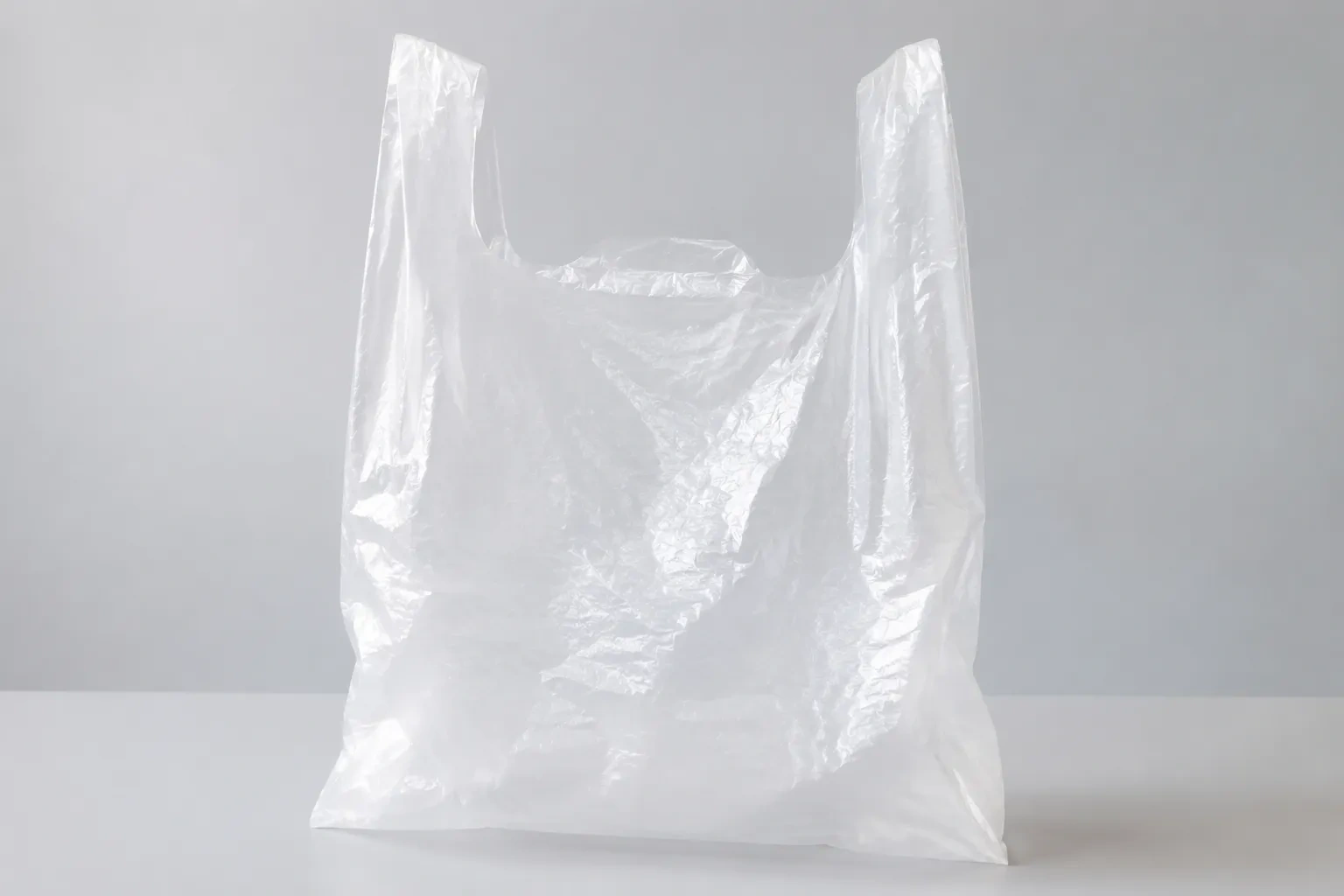
The typical characteristics of polyethylene bags include:
- Translucent or opaque appearance: Clarity varies with resin grade, thickness, additives, and surface finish.
- Good tear and impact resistance: Flexible PE films can absorb handling stress without cracking easily.
- Soft and pliable feel: The bag folds around products and is less likely to scratch delicate surfaces.
- Durability: Film thickness and resin blends can be adjusted for light retail items or heavy industrial contents.
- Low-temperature flexibility: Many PE structures continue to perform well in refrigerated or frozen conditions.
- Reliable heat sealing: PE is commonly used as a sealant layer because it can form dependable seals across a practical processing window.
What Is a PP (Polypropylene) Bag?
A polypropylene bag is made from PP film, which may be cast, unoriented, or oriented. Many clear retail bags use OPP or BOPP film because orientation improves transparency, gloss, and stiffness. The result is a crisp package that allows buyers to inspect the product clearly before purchase.
This visual quality makes PP bags common in food presentation, apparel, stationery, medical supply packaging, electronics, and other markets where cleanliness and product visibility influence the buying decision. PP also has a higher softening temperature than common PE films, although the safe working temperature of a finished bag depends on its exact grade, coatings, inks, seals, and any laminated layers.
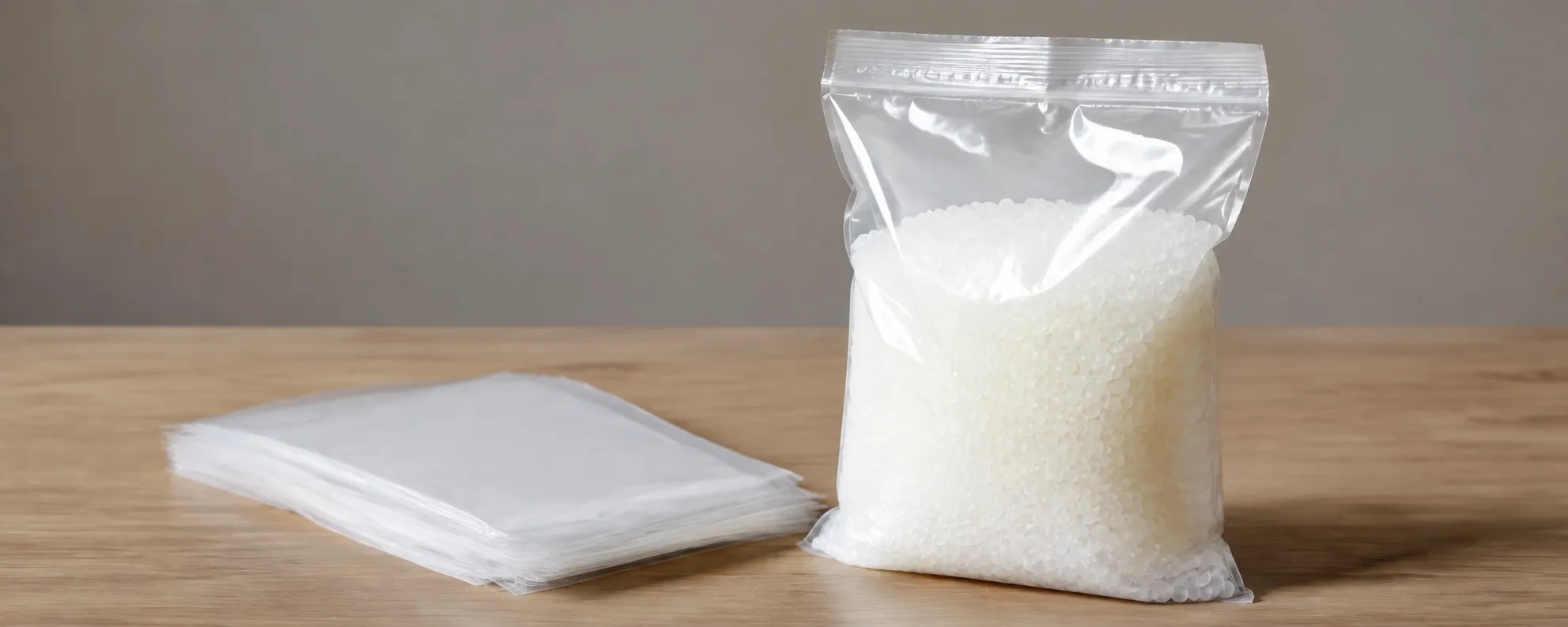
The typical characteristics of polypropylene bags include:
- Crystal-clear transparency: Particularly strong in oriented PP films used for retail display.
- Stiff, crisp structure: The bag holds a neater shape and creates a polished presentation.
- Good tensile strength: Oriented film can provide high strength in the direction of orientation.
- Chemical and moisture resistance: PP resists many oils, chemicals, and water vapor, subject to the product and storage conditions.
- Higher temperature capability: PP generally tolerates warmer conditions than PE, but application testing is still required.
- Good surface for printing and finishing: Treated PP film supports sharp graphics, gloss, and premium retail presentation.
PE (Polyethylene) Bags Advantages
Polyethylene is produced by polymerizing ethylene into long molecular chains. The way those chains branch and pack together creates different PE grades with noticeably different stiffness, density, stretch, and strength. This is why one polyethylene bag can be soft and highly flexible while another feels thin, crisp, and rigid.
The main advantages of PE bags include:
- Flexible product protection: PE can wrap closely around bulky or irregular items without adding much packaging volume.
- Strong cold-temperature performance: Suitable formulations remain flexible for chilled and frozen storage.
- Resistance to wear and handling: PE is well suited to products that move through warehouses, assembly areas, and shipping networks.
- Low-abrasion surface: Soft film can help protect coated, polished, or textile products from scuffing.
- Moisture and dust protection: A correctly sealed PE bag helps isolate products from humidity, dirt, and handling contamination.
- Broad customization range: PE can be manufactured as flat bags, gusseted bags, zip bags, wicketed bags, mailers, liners, tubing, and printed film.
- Economical production: For many common bag styles, PE provides a practical balance of performance, availability, and price.
Some sources describe PE as creating less static or attracting less dust. That should not be treated as an automatic property of every polyethylene bag. Static behavior depends on humidity, formulation, friction, and additives. Electronics or clean manufacturing applications may require a specified antistatic, static-dissipative, or cleanroom-compatible film.
Common Types of Polyethylene Bags Include:
- High-density polyethylene (HDPE): Its molecular chains pack relatively closely, producing a film that is stiffer and more rigid than LDPE. HDPE can provide useful strength at a low thickness and is common in produce bags, merchandise bags, lightweight liners, and applications where a crisp feel is acceptable.
- Low-density polyethylene (LDPE): Its more highly branched molecular structure creates a softer and more flexible film. LDPE offers good clarity and easy heat sealing, making it suitable for apparel, food-contact inner bags, retail products, parts bags, and general protective packaging.
- Linear low-density polyethylene (LLDPE): LLDPE combines flexibility with strong tensile, stretch, and puncture performance. It is frequently used alone or blended with LDPE for heavy contents, liners, industrial bags, and products that place greater stress on the film.
A well-engineered LLDPE blend can sometimes outperform a thicker conventional film, while sharp metal parts may still require extra thickness, corner protection, or a reinforced construction.
Applications of Polyethylene Bags
Polyethylene is used far beyond shopping bags. In flexible packaging, typical PE bag applications include:
- Heavy-duty bags for machine parts, fasteners, and industrial components
- Carton, drum, tote, pallet, and container liners
- Food-contact bags for ingredients, produce, frozen foods, and bakery operations
- Clear or printed garment and textile bags
- Self-sealing poly mailers for clothing and e-commerce orders
- Resealable zipper bags for parts, samples, food, and retail products
- Wicketed or roll bags for manual and automated packing
- Protective film, tubing, sheeting, and custom converted bags
PE is a strong starting point when a package needs flexibility, reliable sealing, moisture protection, or resistance to repeated handling. If oxygen, aroma, grease, or light barrier is critical, PE may be combined with EVOH, polyamide, metallized film, foil, or another functional layer.
Polypropylene (PP) Bags Advantages
Polypropylene bags are characterized by their clear appearance, stiffness, gloss, and useful resistance to heat and many chemicals. Compared with a soft PE bag, PP usually feels firmer and holds a cleaner rectangular shape. That difference can make a packaged product look more organized and premium on a retail shelf.
The advantages of polypropylene bags include:
- Excellent product visibility: Clear PP and BOPP films allow colors, labels, and product details to remain easy to see.
- Crisp presentation: Greater stiffness helps the bag resist sagging and maintain a tidy display.
- Higher heat resistance than common PE film: Useful for selected warm-fill, sterilization-adjacent, or elevated-temperature applications after validation.
- Resistance to moisture, oils, and many chemicals: Helpful for food, personal care, medical supplies, and industrial products.
- Scratch-resistant package surface: A firm outer film can protect printed graphics and improve shelf appearance, although brittle puncture behavior must be considered.
- High-quality printing: Surface-treated BOPP is widely used as a printable layer for branded flexible packaging.
- Food and medical packaging potential: Suitable grades can be used for regulated applications when the complete finished structure and manufacturing process meet the applicable requirements.
A polymer type by itself is not “FDA approved” packaging. Buyers should request food-contact or medical documentation for the specific resin, additives, inks, adhesives, coatings, and finished construction intended for their market.
Typical Applications of Polypropylene Bags
PP bags are commonly used where high clarity, stiffness, cleanliness, or printed presentation is important. Typical applications include:
- Clear bakery bags for bread, cookies, pastries, and confectionery
- Food wrapping and printed snack packaging
- Apparel, greeting cards, stationery, toys, and retail display products
- Medical and laboratory supplies that require controlled, product-specific packaging
- Electronic components and small technical products
- Automotive parts and accessories
- BOPP outer webs in laminated stand-up pouches and flat packaging
- Header bags, hanging display bags, and adhesive-flap bags
PP is not automatically the best option merely because it is clearer or stiffer. A highly oriented film can split when sharply punctured, and some PP constructions need a dedicated sealant layer. The supplier should match the film orientation, thickness, seal method, and bag style to the actual product.
What Is the Difference Between Polyethylene and Polypropylene Bags?
Polyethylene bags are generally softer, more flexible, more forgiving under impact, and often more cost-effective for industrial protection, liners, shipping, and heavy-duty storage. Polypropylene bags are generally clearer, stiffer, glossier, and more resistant to higher temperatures, making them well suited to food presentation, medical supplies, retail goods, and other products that benefit from a crisp visible package.
| Selection point | PE bags | PP bags |
|---|---|---|
| Appearance | Usually translucent to clear, with a softer look | Often crystal clear and glossy |
| Feel | Soft, flexible, and pliable | Stiff, crisp, and structured |
| Handling | Good impact and puncture tolerance | Good tensile strength but less forgiving to sharp puncture in some oriented films |
| Temperature | Strong cold-temperature flexibility | Generally better resistance to warmer conditions |
| Sealing | Broad, dependable heat-seal performance | Depends on PP type, coating, or sealant layer |
| Common priority | Protection, flexibility, and cost control | Visibility, stiffness, and retail presentation |
Packaging solutions by Mille Container
Polyethylene and polypropylene bags are two widely used packaging options. Because each material offers different advantages, the right choice depends on the product and its intended application.
Mille Container provides PE and PP bags in custom sizes, thicknesses, styles, and printed options to meet different packaging requirements.