
Choosing the right ziplock bag is not only a matter of picking a size from a shelf. The zipper profile, film material, thickness, bag dimensions, seal performance, and intended use all affect whether the bag protects its contents or becomes the source of leaks, tears, and handling problems.
Ziplock bags are used for food, retail accessories, seeds, hardware, documents, electronics components, medical supplies, travel kits, and many other small products. A bag that works well for sandwiches may be unsuitable for a sharp metal part. A clear storage bag may be practical for a dry product but inappropriate for a hot filling or a long freezer cycle.
This guide explains the main ziplock bag formats, materials, sizes, closure options, performance limits, and purchasing checks so you can select a bag based on the complete application rather than appearance alone.
What Are Ziplock Bags?
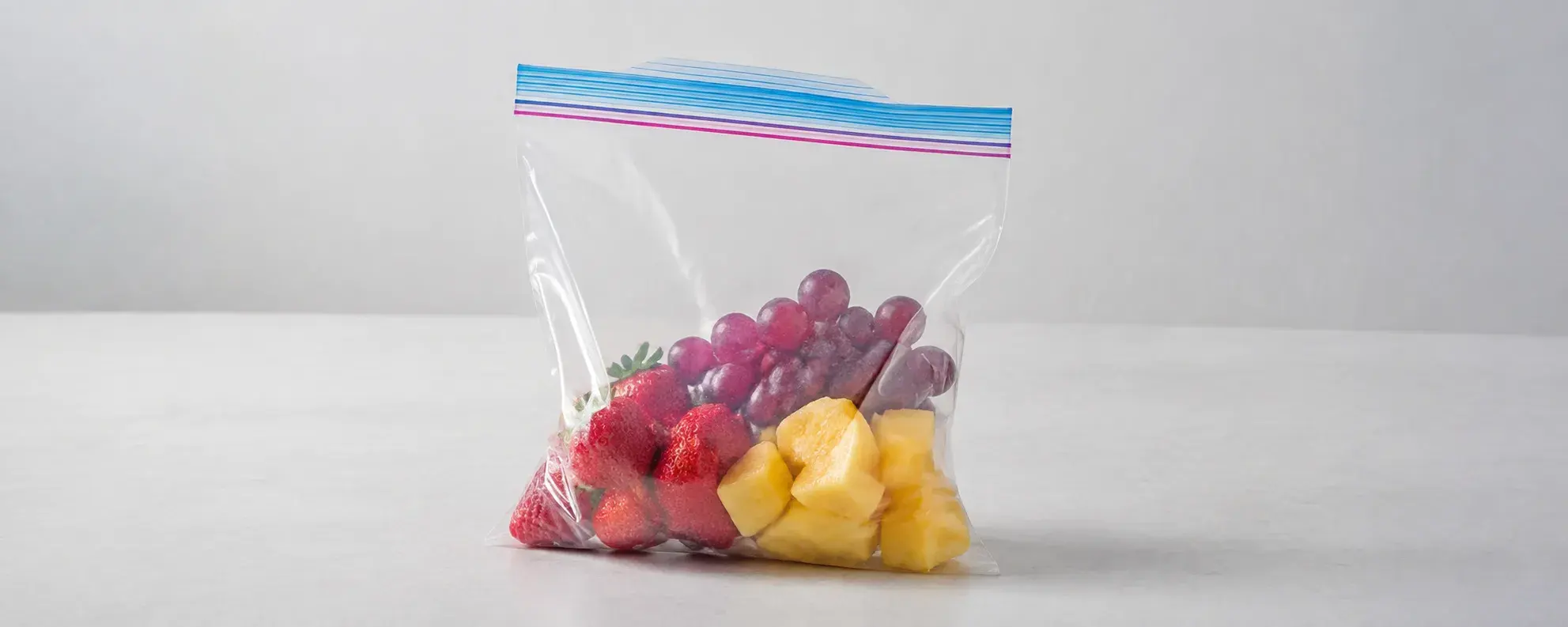
A ziplock bag is a flexible bag with two interlocking tracks at its opening. Pressing the tracks together creates a resealable closure that can be opened and closed repeatedly. Some designs use a simple pinch-to-close profile, while others use a slider that travels along the track.
The zipper closes the mouth of the bag, but it does not replace the rest of the package design. Film thickness controls much of the tear and puncture resistance. The side seams and bottom seal determine how the bag handles filling and stacking. The bag opening, zipper height, and headspace affect how easily an operator can load and empty the contents.
A good ziplock bag therefore combines a suitable closure with the right film and dimensions. The strongest-looking zipper will still fail if the bag is overfilled, the film is too thin for the contents, or the tracks are contaminated with powder, grease, or product particles.
Ziplock Bags vs. Zipper Pouches
A ziplock bag usually describes a flat flexible bag, while a zipper pouch may include a wider opening, gussets, a stand-up base, a high-barrier laminate, or a printed retail structure. A pouch can still use a zip closure, but its material and construction are selected for a more demanding presentation or protection requirement.
What Types Of Ziplock Bags?
Different zipper profiles solve different handling and protection problems. When comparing products, look at the closure mechanism and the complete bag format rather than treating every resealable bag as the same.
| Bag Type | How It Closes | Best Fit | Important Limitation |
|---|---|---|---|
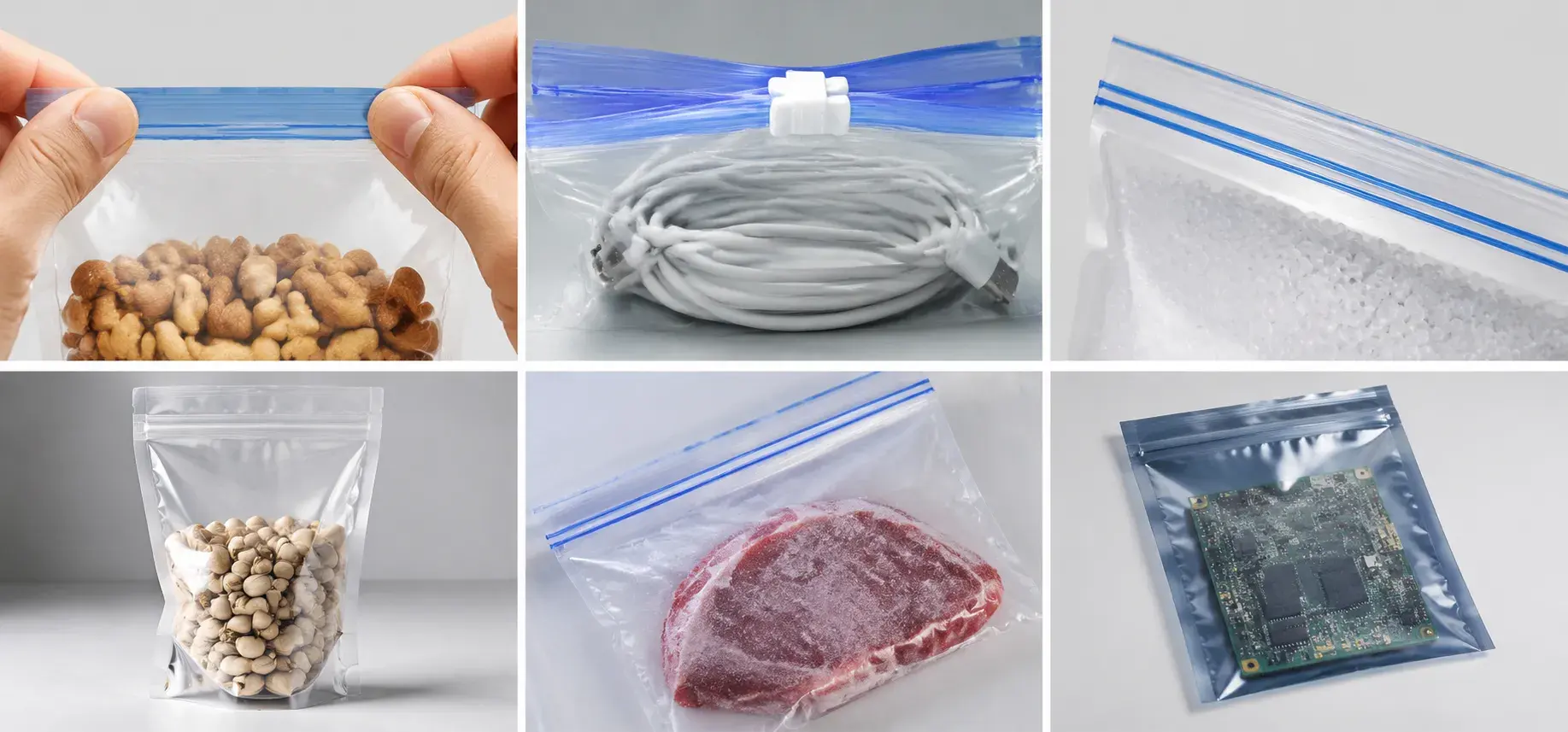
| Pinch-seal zip bag | The two tracks are pressed together by hand | Food portions, small parts, general storage | The tracks must be aligned and free of product |
| Slider zip bag | A slider runs along the closure track | Frequent opening, larger openings, quick packing | The slider adds cost and can be damaged by rough handling |
| Double-zip bag | Two interlocking tracks create a second closure line | Moisture-sensitive goods and repeated handling | Still requires complete closure; it is not a vacuum seal |
| Stand-up zipper pouch | A zipper is combined with a gusseted or flat-bottom structure | Snacks, powders, pet treats, retail displays | The finished structure may use laminated layers and needs a stronger specification |
| Freezer zip bag | A closure designed to remain flexible at low temperature | Frozen meat, seafood, vegetables, prepared food | The bag still needs headspace and careful handling when frozen |
| Anti-static zip bag | A resealable track is combined with an ESD-control film | Electronic components and sensitive parts | A clear ordinary poly bag does not provide the same ESD protection |
What Materials Are Ziplock Bags Made Of?
Polyethylene is the most common material family for flexible ziplock bags because it combines flexibility, moisture resistance, heat-sealing capability, and relatively low cost. The exact resin and film structure should be selected according to the product, temperature range, and required durability.
- LDPE: Soft, flexible, and easy to open and close. It is widely used for everyday food and storage bags.
- LLDPE: Provides a useful balance of flexibility and puncture or tear performance in many film structures.
- HDPE: Stiffer and more opaque than LDPE in many applications, with good strength for lightweight packaging.
- PP: Can provide clarity and stiffness for selected pouch formats, but the closure and sealing design must be compatible with the resin.
- Barrier laminates: Combine plastic layers or other barrier materials when oxygen, aroma, light, or moisture protection is more important than simple storage.
- Recycled, bio-based, or compostable structures: These options require a product-specific review because environmental claims depend on the finished bag, additives, printing, zipper, and available disposal route.
Ask for the complete film structure, thickness, closure material, seal temperature range, and intended use. A bag can be food-contact compliant while still being unsuitable for freezing, heating, sharp contents, or long-term storage.
How Do You Choose The Right Ziplock Bag Size?
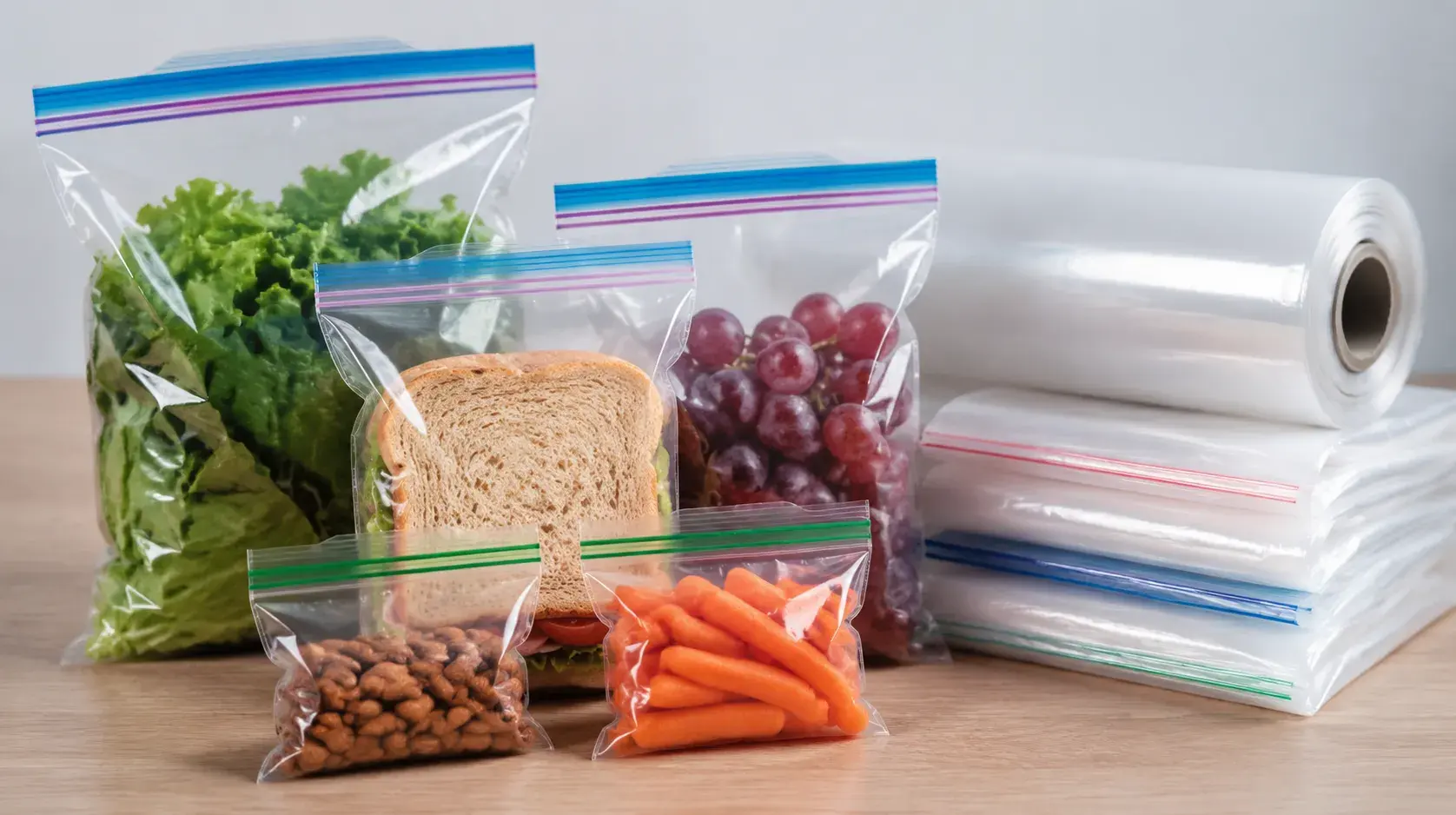
Choose a bag that gives the product enough room to enter without forcing the zipper or side seams. A nominal size such as 4 x 6 inches is only a starting point because usable space is reduced by the zipper profile, side seals, bottom seal, and required headspace.
| Approximate Size Class | Typical Contents | What to Confirm |
|---|---|---|
| Small, about 3 x 4 to 6 x 8 in | Spices, samples, jewelry, screws, snacks, travel accessories | Opening width and whether the contents can pass the zipper smoothly |
| Medium, about 7 x 9 to 10 x 12 in | Sandwiches, clothing accessories, documents, general food portions | Usable width after the side seals and the amount of headspace needed |
| Large, about 11 x 14 to 13 x 15 in | Bulkier food, garments, craft materials, larger components | Film thickness and zipper strength when the bag is lifted or stacked |
| Jumbo or custom | Bedding, blankets, high-volume products, retail pouches | Gusset, handle, slider, filling line, pallet packing, and transport requirements |
If the contents are irregular or sharp, send a sample or drawing so the manufacturer can evaluate the usable dimensions and film strength instead of quoting from the flat size alone.
Which Industries Use Ziplock Bags?
Resealable bags are useful wherever products need temporary protection, visual identification, or repeated access. The required specification changes from one industry to another.
- Food and foodservice: Sandwiches, bakery items, produce portions, spices, frozen ingredients, seafood, meat, and snack packs.
- Retail and e-commerce: Jewelry, stationery, cosmetics accessories, craft items, replacement parts, and small merchandise.
- Hardware and industrial supply: Screws, fittings, gaskets, labels, maintenance kits, and small components that need visible organization.
- Electronics: Anti-static or static-dissipative bags for components that may be damaged by electrostatic discharge.
- Agriculture and horticulture: Seeds, samples, dried leaves, and small cultivation materials, subject to moisture and product-specific requirements.
- Healthcare and laboratories: Small non-sharp supplies, specimen-related secondary packaging, and organized kits where the bag specification and regulatory requirements are clearly defined.
- Travel and hospitality: Toiletries, dental kits, amenities, spare accessories, and guest-use items.
Are Ziplock Bags Food-Safe?
A ziplock bag is food-safe only when the finished bag is intended and documented for food contact. The claim should cover the film, zipper, colorants, additives, inks, coatings, and any adhesive or laminate used in the package.
Before using a bag for food, check the manufacturer’s food-contact declaration, the temperature range, and the type of food or storage condition covered. A bag made from a food-contact resin may still be unsuitable for high-fat foods, acidic foods, long-term storage, freezing, or heating unless those uses are included in the documentation.
For commercial packaging, request lot traceability and a consistent specification. Household appearance alone is not a substitute for a documented food-contact requirement.
Can Ziplock Bags Be Used In Freezers, Microwaves, Or Boiling Water?
Do not assume that a resealable bag is safe at every temperature. Standard ziplock bags are generally designed for ambient storage unless the manufacturer provides a different rating.
- Freezing: Use a bag specifically designed for freezer conditions. Leave room for food or liquid to expand, remove excess air without stressing the zipper, and avoid dropping a frozen bag onto a hard surface.
- Microwaving: Use a microwave-safe container or a bag explicitly labeled for microwave use. Do not heat a sealed bag, and do not place an ordinary ziplock bag in a microwave because the film or zipper may deform.
- Boiling or sous vide: Use only a bag that has been tested and labeled for the specific temperature and cooking method. A standard storage bag is not automatically suitable for boiling water.
- Hot filling: Confirm the film, zipper, and seal design with the supplier before filling a bag with hot product. The bag may need a different structure or a separate heat-sealed closure.
Are Ziplock Bags Airtight And Waterproof?
A well-made ziplock bag can provide useful moisture and spill resistance, but the zipper is not the same as a hermetic or vacuum seal. Performance depends on the track design, closure pressure, film, side seals, bag orientation, and whether the zipper remains free of product particles.
For liquids, keep the bag below its maximum fill level and leave headspace. Close the zipper from one side to the other while pressing excess air toward the opening. Then hold the bag upright and check the closure before placing it inside another container or transporting it.
If the product must remain leakproof under pressure, vibration, or long transport, ask for a sample test that matches the real application. A short tabletop test may not represent what happens inside a carton or pallet.
How Do You Clean And Reuse Ziplock Bags?
- Empty the bag and remove food or particles before rinsing.
- Wash with lukewarm water and mild detergent. Avoid sharp tools and abrasive scrubbers that can scratch or puncture the film.
- Clean the zipper track carefully because grease or powder trapped in the interlocking profile can prevent a complete closure.
- Rinse thoroughly and dry the bag fully with the opening propped apart.
- Reuse only when the bag remains clean, odor-free, undamaged, and suitable for the next product.
Single-use food bags should not automatically be reused for raw meat, allergens, chemicals, or products with different hygiene requirements. For repeated commercial use, select a bag that is specifically designed for the cleaning and turnover process.
What Are The Advantages And Limitations Of Ziplock Bags?
| Advantages | Limitations |
|---|---|
| Fast opening and repeated access | A zipper can fail if it is misaligned or contaminated |
| Visible contents and easy product identification | Clear film does not automatically provide light, oxygen, or odor barrier |
| Many sizes, thicknesses, closure profiles, and custom formats | Thin film may puncture when used with sharp or heavy contents |
| Useful moisture and spill protection when closed correctly | Not a substitute for a hermetic seal or certified high-temperature package |
| Low packing complexity and convenient organization | Plastic recovery options vary by film type and local collection system |
What Should You Check When Buying Custom Ziplock Bags?
The lowest unit price is rarely the only useful comparison. A consistent specification prevents operators from receiving a bag that looks similar but performs differently on the filling line or during transport.
- Product details: Share the product type, weight, dimensions, shape, moisture level, sharp edges, and expected shelf life.
- Bag construction: Confirm flat size, usable size, gusset, film structure, thickness, zipper type, seal width, and opening tolerance.
- Performance tests: Request samples for filling, opening, resealing, drop, puncture, compression, cold storage, or leak testing as appropriate.
- Printing: Confirm the number of colors, print area, ink system, registration tolerance, reverse or surface printing, and whether the printed bag is suitable for the intended contact condition.
- Compliance documents: Ask for food-contact declarations, ESD documentation, recycled-content information, or compostability evidence when the claim is relevant.
- Production and delivery: Review MOQ, sampling time, production lead time, carton packing, pallet quantity, inspection method, and replacement procedure for nonconforming bags.
Frequently Asked Questions About Ziplock Bags
What Is the Difference Between a Slider Bag and a Pinch-Seal Bag?
A pinch-seal bag closes when the two tracks are pressed together by hand. A slider bag uses a separate slider to join or separate the tracks. Slider bags can be quicker for repeated opening, while pinch-seal bags usually have fewer components and a lower material cost.
Are All Clear Ziplock Bags Food-Safe?
No. Transparency only describes appearance. Use a bag supported by the manufacturer’s food-contact documentation and confirm that the intended food, temperature, and storage time are covered.
Can I Store Liquids in a Ziplock Bag?
You can use a suitable bag for liquids when the film, seams, and zipper are designed for that use. Do not fill to the top, keep the tracks clean, close the zipper fully, and use secondary containment for transport or storage where a leak would cause damage.
Why Does My Ziplock Bag Keep Opening?
Common causes include product caught in the tracks, a bag that is overfilled, a damaged zipper, uneven alignment, or pressure from contents expanding inside the bag. Clean and realign the closure, reduce the fill level, and replace the bag if the profile is permanently deformed.
What Thickness Is Best for Ziplock Bags?
There is no universal best thickness. Lightweight dry goods may need only a flexible film, while heavy, sharp, frozen, or repeatedly handled contents need more puncture and tear resistance. Compare thickness with resin, bag size, seal design, and the actual load rather than using mil thickness alone.
How Do I Choose a Ziplock Bag Supplier?
Choose a supplier that can explain the film and closure specification, provide representative samples, confirm relevant compliance documents, control dimensions and sealing, and communicate MOQ and lead time clearly. A supplier’s ability to test the finished bag is more useful than a generic statement that the bag is “high quality.”
Conclusion
Start with the contents and the way the bag will be handled. Select the closure profile for the number of opening cycles, the film for the required resistance, the size for the product and headspace, and the compliance documents for the intended market.
For food, check contact and temperature requirements. For liquids, test leakage under realistic pressure. For electronics, specify the ESD performance instead of choosing an ordinary clear bag. For custom printed retail packaging, evaluate the complete pouch, including zipper, gusset, seal, ink, and transport packing.
Mille Container can review these requirements for custom ziplock bags, resealable pouches, printed packaging bags, and related flexible packaging formats. The most reliable specification is the one that connects material, closure, dimensions, testing, and end use before production begins.