
Plastic bags are simple in appearance but highly engineered in practice. A flat poly bag for a small component, a gusseted liner for a pallet, a printed retail bag, and a food packaging pouch may all be called plastic bags even though their films, seals, closures, and performance requirements are very different.
The right bag protects the packed product, fits the filling process, survives handling and transport, and supports the required shelf life or storage period. Choosing only by color or nominal size can create problems such as weak seals, punctures, poor clarity, static buildup, or a bag that does not comply with the intended end use.
This guide explains what plastic bags are, how plastic film becomes a finished bag, which materials and structures are commonly used, how bag types differ, and what buyers should check before ordering stock or custom plastic packaging bags.
What Are Plastic Bags?
A plastic bag is a flexible container made from a polymer film. The film can be cut and sealed into a flat bag, folded to form gussets, fitted with a zipper or adhesive flap, printed with graphics, or converted into a specialty structure for shipping, food, retail, industrial, or technical use.
Most plastic bags are produced from polyethylene or polypropylene. These polymer families can be formulated into films with different levels of flexibility, clarity, stiffness, moisture resistance, sealability, puncture resistance, and chemical tolerance. A bag’s performance is determined by the complete structure, not by the word “plastic” alone.
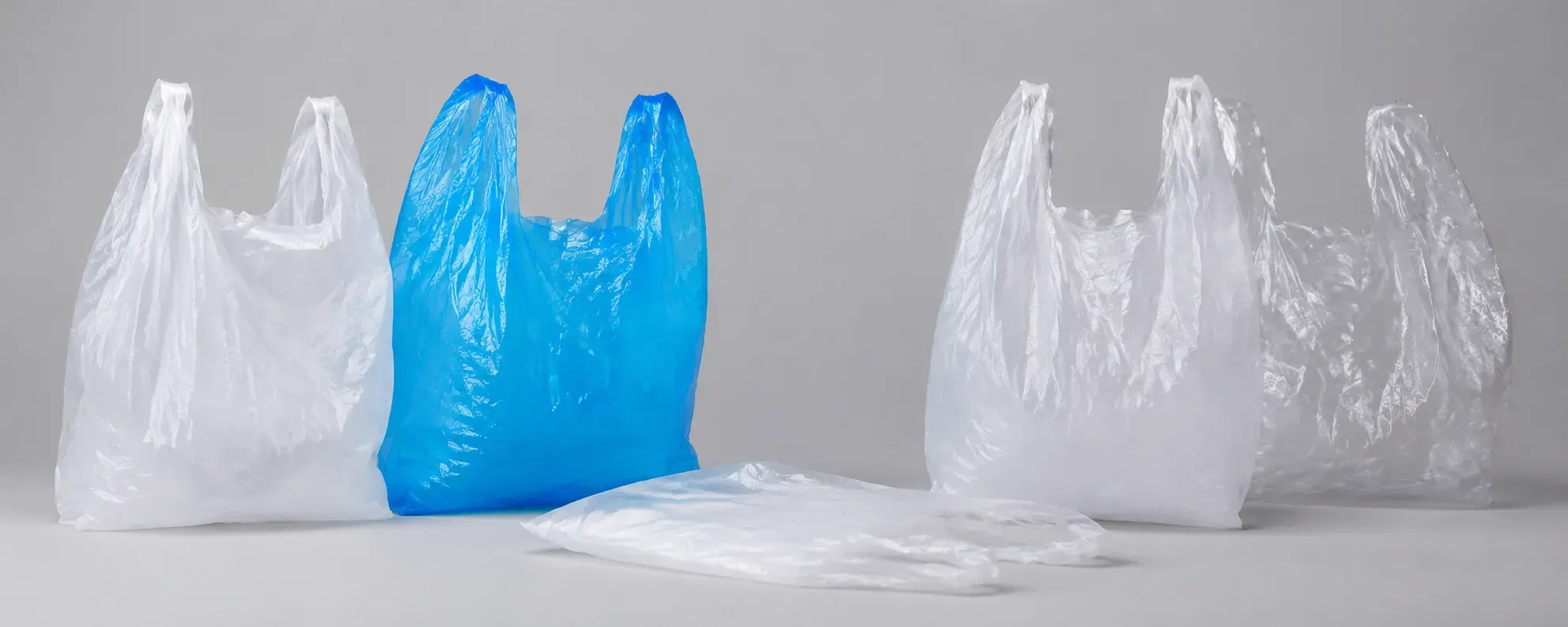
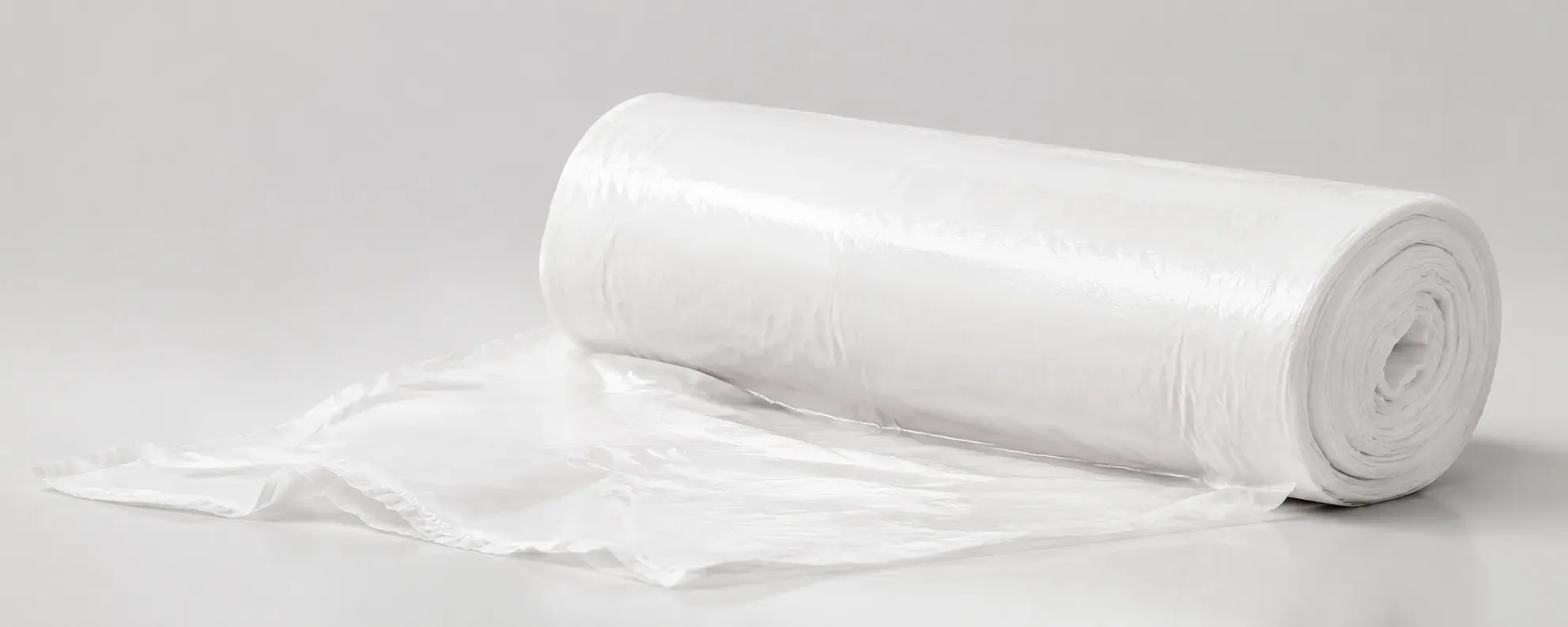
Plastic bags may be transparent, translucent, opaque, colored, metalized, printed, or laminated. They may close with a heat seal, zipper, adhesive strip, drawstring, flap, slider, hook-and-loop feature, or tamper-evident closure. They can also be supplied on rolls, in cartons, in wicketed stacks, or as individually cut and packed units for manual or automatic filling.
- Material: resin type, density, blend, recycled content, additives, and barrier layers.
- Dimensions: flat width, finished length, gusset, opening, usable space, and headspace above the product.
- Thickness: measured in mils or microns and selected for load, puncture, abrasion, and service life.
- Construction: flat, side-gusseted, bottom-gusseted, stand-up, multi-layer, perforated, or reinforced.
- Closure: heat seal, zipper, adhesive, tamper-evident strip, tie, drawstring, or another access system.
- Conversion: printing, cutting, punching, venting, wicketing, rounded corners, handles, and special notches.
This range of options is why the phrase “plastic bag” describes a packaging category rather than one standardized product. The correct specification should always be tied to the contents, filling method, handling conditions, and disposal or recovery route.
How are Plastic Bags Made?
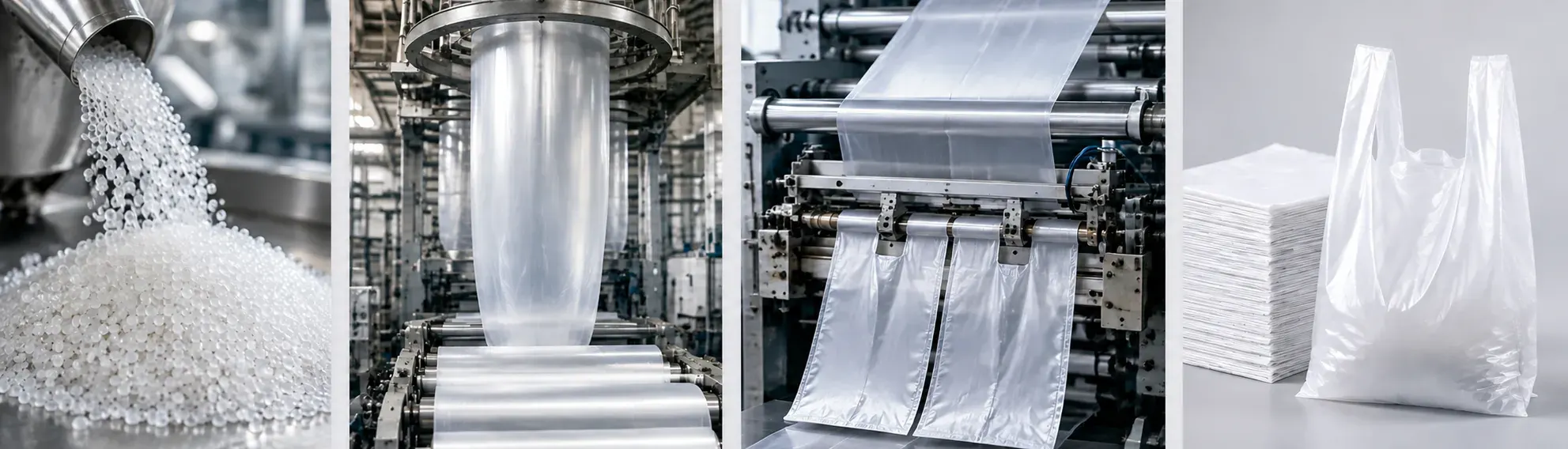
Plastic bag manufacturing starts before resin pellets arrive at the bag factory. The process begins with hydrocarbon feedstocks, continues through monomer production and polymerization, and then moves into color preparation, extrusion, cooling, film collapsing, winding, printing, cutting, sealing, and inspection. Understanding this sequence explains why bags made from the same general plastic family can have very different properties.
Producing Ethylene and Propylene
Polyethylene begins with ethylene, a small hydrocarbon molecule. Industrial ethylene is commonly produced by heating feedstocks such as ethane or naphtha in a cracking process. The high temperature breaks larger hydrocarbon molecules into smaller molecules, including ethylene. Propylene, the starting monomer for polypropylene, is obtained through related refinery and petrochemical processes.
The monomers are purified before polymerization because trace contaminants can interfere with the catalyst or change the consistency of the final resin. At this stage the material is not yet a film and does not resemble a bag. It is a chemical building block that will be linked into much longer polymer chains.
Turning Monomers into Resin
During polymerization, ethylene or propylene molecules react in the presence of a catalyst under controlled pressure and temperature. The molecules join into long chains. The process conditions, catalyst, comonomers, molecular weight, chain branching, and density determine whether the resulting resin behaves like flexible LDPE, tougher LLDPE, stiffer HDPE, or a grade of polypropylene.
The polymer is then stabilized, compounded as required, and formed into pellets for transport and processing. Resin suppliers identify grades according to properties such as melt flow, density, sealability, stiffness, clarity, impact resistance, and suitability for contact applications. A plastic bag manufacturer selects or blends these grades to build the required film behavior.
Polyethylene and Polypropylene
Polyethylene is widely used for plastic bags because it can be soft or stiff, stretches without breaking in many structures, resists moisture, and heat-seals efficiently. Polypropylene generally provides more stiffness, clarity, and resistance to repeated bending, but it uses a different processing and sealing window. These differences begin at the molecular level and continue through extrusion and bag conversion.
LLDPE may be added for puncture resistance, LDPE for processing and softness, HDPE for stiffness and tensile behavior, or a specialized sealant grade for lower sealing temperature. The correct formula depends on the bag rather than on a general ranking of plastics.
How Plastic Bags are Made
Natural polyethylene film is usually translucent or clear depending on the resin and process. Color is added before extrusion so it becomes distributed throughout the film rather than sitting only on the surface. The color system must be compatible with the base resin and with any food-contact, light-blocking, recycling, or regulatory requirement.
Adding Color
Masterbatch is a concentrated mixture of pigment or additives carried in a compatible polymer. A measured amount is blended with natural resin pellets before the material enters the hopper. The dilution ratio controls shade, opacity, and additive level. Consistent dosing is essential because small variations can change the appearance from one film roll to the next.
Cube or Compound Blends
A compound or cube blend combines a controlled portion of colored material with the base resin. This can simplify handling for repeat colors and may improve dispersion compared with adding loose pigment. The manufacturer still needs to verify that the blend melts uniformly and does not create streaks, unmelted particles, or changes in sealing.
Precolored Resin
Precolored resin arrives with the color already compounded into the pellets. It can provide strong consistency for large or repeated production runs, although it may require a higher material commitment and less flexibility for small color changes. Whichever method is used, the approved color should be checked under consistent lighting and at the actual film thickness.
Feeding Resin Through the Hopper
Natural resin, color concentrate, and functional additives are weighed or metered into the hopper above the extruder. Gravimetric dosing equipment can control the blend by weight, while simpler systems may use volumetric feeders. Uniform feeding is important because an inconsistent blend can produce color bands, thickness changes, weak seals, or an additive level that falls outside the intended specification.
The hopper and material lines must remain clean and dry. Contamination from a previous color, incompatible resin, dust, or moisture can appear as gels, black specks, bubbles, streaks, or odor in the finished film. Production changeovers therefore include controlled purging and cleaning rather than simply pouring a new resin into the machine.
The Extruder Barrel and Rotating Screw
From the hopper, pellets fall into a heated barrel containing a rotating screw. The first screw zone conveys and compacts the solid pellets. Farther along the barrel, heat from the barrel and friction from the screw melt the resin. The final mixing and metering zones make the melt more uniform and develop stable pressure before it reaches the die.
Screw design is selected for the resin and output. Its diameter, length, compression ratio, channel depth, and mixing sections influence how well the polymer melts and how much shear it experiences. Too little mixing can leave unmelted particles or poorly dispersed pigment. Too much heat or shear can degrade the resin and produce odor, discoloration, gels, or loss of mechanical performance.
Operators monitor barrel-zone temperatures, screw speed, motor load, melt pressure, and melt temperature. These readings are connected: increasing line speed changes output and cooling demand, while a restricted screen can increase pressure even if the screw speed remains unchanged.
Screen Packs, Breaker Plates, and the Circular Die
Before the molten polymer reaches the die, it passes through a screen pack supported by a breaker plate. The screens filter foreign material and unmelted particles while the breaker plate supports the screens and helps straighten the melt flow. A rising pressure difference across the screens indicates that contamination is building and the pack may need to be changed.
In a blown-film line, the cleaned melt enters an annular, or ring-shaped, die. The die forms a continuous tube of hot polymer. Die-gap uniformity, temperature balance, and clean die lips are essential for controlling gauge around the circumference of the bubble. A buildup at one point can create a recurring line or thick area through the entire roll.
Inflating the Film Bubble and Setting the Width
Air introduced through the die inflates the molten tube into a vertical bubble. The ratio between the bubble diameter and the die diameter is called the blow-up ratio. It affects film width, orientation, stiffness, tear balance, and optical properties. The take-up speed above the die stretches the film in the machine direction and helps establish thickness.
Bubble diameter controls the lay-flat width after the tube is collapsed. Operators maintain the bubble with controlled internal air and stabilizing equipment. An unstable bubble can move from side to side, creating wrinkles, gauge variation, poor winding, and inconsistent bag dimensions.
Cooling Tower, Air Ring, and Frost Line
A cooling air ring directs air around the hot film as it leaves the die. The material changes from a molten, glossy state into a solid film as it rises through the cooling tower. The visible boundary where this transition occurs is known as the frost line.
Frost-line height reflects the relationship between melt temperature, cooling rate, output, bubble size, and take-up speed. If cooling is uneven, the film may show variable clarity, thickness, blocking, or mechanical properties. Consistent airflow and temperature are therefore part of gauge control, not merely a way to keep the film from feeling hot.
As the film is stretched and cooled, polymer chains become oriented. This orientation explains why tear behavior can differ between the machine and transverse directions. It also explains why two films made from the same resin can behave differently after changes to blow-up ratio or take-up speed.
Collapsing Frames, Nip Rollers, and Gussets
At the top of the tower, collapsing frames guide the round bubble into a flat tube. Nip rollers pull the film upward, close the bubble, and help isolate the internal air. Their speed works with output and bubble size to control thickness and orientation.
Gussets can be introduced as the tube is collapsed or during later conversion. Side-gusset boards push controlled folds into the tube so the finished bag can expand when filled. The gusset depth, symmetry, and fold position must remain stable; otherwise the bag may lean, open unevenly, or create misaligned seals.
The collapsed tube then passes through guide rollers and may be slit into one or more webs. Tension control is important because stretched or slack film can cause wrinkles, telescoped rolls, print registration problems, and inconsistent cutting later.
Winding, Printing, Cutting, and Sealing
The lay-flat film is wound into rolls for conversion. Roll hardness, edge alignment, tension, and core condition affect how smoothly the material unwinds on printing and bag-making equipment. Finished film may be surface treated to improve ink or adhesive bonding before printing or lamination.
Printing can be applied by flexographic, rotogravure, digital, or another compatible method. Some packages use surface printing, while laminated structures can trap the ink between layers for abrasion resistance. The artwork repeat, color density, registration, curing, and odor must be checked before the roll moves to bag making.
Bag-making machines unwind the film, fold or position the web, create side or bottom seals, cut individual bags, and add features such as zippers, adhesive flaps, holes, handles, perforations, notches, or wicket headers. A plain flat bag may require only cutting and one heat seal, while a stand-up pouch can require several films, a bottom gusset, zipper placement, multiple seals, and precise registration.
Preventive Controls During Production
Manufacturers reduce defects by controlling material identification, cleaning, temperature profiles, filtration, bubble stability, gauge, surface treatment, roll tension, sealing conditions, and operator inspection. These controls are preventive because they address the process before a finished bag fails.
Typical in-process checks include resin and additive verification, hourly width and thickness measurements, visual inspection for gels or contamination, corona-treatment checks before printing, print registration checks, seal-temperature verification, and bag-count confirmation. Critical applications may require retained samples and full lot traceability.
Seal Formation and Common Seal Failures
A bag can have a strong film and still fail at the seal. Heat-sealing joins a sealant layer by applying heat, pressure, and time. If the temperature is too low, the seal may be incomplete. If it is too high, the film can distort, shrink away from the seal, or become brittle. Uneven pressure can create a channel leak even when most of the seal looks closed.
The product itself can also interfere with sealing. Powder, oil, crumbs, frozen particles, or liquid trapped between the panels can create a weak path. A commercial specification should state the intended filling conditions and include a seal-strength or leak test that reflects the real product, not just an empty-bag inspection.
For zipper bags, the closure track and the permanent side seals must be evaluated separately. The zipper controls repeated access, while the side and bottom seals carry the product load. A good design makes those two systems work together instead of asking the zipper to perform as a pressure seal.
| Production Stage | Main Control Point | Why It Matters |
|---|---|---|
| Resin blending | Correct grade, additive ratio, moisture, and lot traceability | Sets the baseline for strength, clarity, sealing, and compliance |
| Extrusion | Melt temperature, pressure, cooling, and gauge profile | Controls thickness uniformity and film consistency |
| Printing or lamination | Ink adhesion, registration, bond strength, and curing | Protects graphics and prevents layer separation or odor issues |
| Bag conversion | Seal temperature, pressure, cut position, and feature alignment | Determines usable size, leak resistance, and filling-line performance |
| Final inspection | Sampling plan, dimensions, appearance, function, and carton count | Confirms that production matches the approved sample and specification |
Controlling Film Thickness and Bag Gauge
Thickness is commonly measured in mils in the United States and microns in metric specifications. One mil equals 0.001 inch. A higher number generally provides more material, but thickness alone does not guarantee performance because resin type, orientation, seal design, and construction also influence strength.
| Approximate Thickness | Typical Application Direction | What to Evaluate |
|---|---|---|
| 0.5-0.8 mil | Very light produce, inner liners, temporary protection | Low load, short use, and minimal abrasion |
| 0.8-1.5 mil | Everyday food, retail, garment, and general storage bags | Seal strength, opening behavior, and product weight |
| 1.5-3 mil | Shipping protection, heavier retail bags, reusable handling | Puncture, tear, drop, and repeated handling resistance |
| 3 mil and above | Industrial liners, pallet covers, construction, and demanding loads | Load rating, seam design, folding, and transport conditions |
The best thickness is the lowest specification that reliably protects the product through its intended life. Over-specifying film can increase cost and material use, while under-specifying it can cause leaks, returns, product loss, and unsafe handling.
Production Verification and Finished-Bag Testing
A performance claim should describe a test method and a pass condition. “Heavy duty,” “leakproof,” “freezer safe,” “anti-static,” or “food grade” are not complete specifications by themselves. The supplier and buyer should agree on what will be measured, how samples will be conditioned, and what result is acceptable.
| Test Area | What It Reveals | Example of a Useful Test Setup |
|---|---|---|
| Tensile and elongation | How the film stretches and carries pulling force | Test machine and cross direction on conditioned film samples |
| Tear resistance | How a cut or nick grows through the film | Start a controlled tear and compare propagation by direction |
| Puncture or impact | Resistance to a point, edge, drop, or rough product | Use representative contents, not only a smooth test probe |
| Seal strength | Load required to separate a finished seam | Condition sealed bags and test the actual seal width and structure |
| Leak or burst | Whether the package stays closed under pressure | Fill with the intended product, close, invert, compress, or drop as required |
| Static performance | Charge generation, decay, or shielding behavior | Measure under the humidity and handling conditions of the electronics workflow |
Testing does not need to be complicated for every order. A small custom bag may only need dimensional, seal, opening, and drop checks. A food, medical, electronics, or hazardous-material application may require a documented test plan, lot records, and third-party reports.
What materials are commonly used in plastic bags?
Polyethylene dominates flexible plastic bag production because it can be made into soft, strong, sealable, and moisture-resistant films across a wide range of densities. Polypropylene is also important where clarity, stiffness, fatigue resistance, or higher temperature performance is useful. Other polymers and laminates serve specialty applications.
High-Density Polyethylene (HDPE)
HDPE film is relatively stiff and lightweight, with good moisture resistance and resistance to many everyday chemicals. It is often used for grocery-style bags, produce bags, liners, and applications where a thin film needs useful tensile performance. Its lower stretch can be an advantage for stable dimensions, but it may feel less soft than LDPE.
Low-Density Polyethylene (LDPE)
LDPE is flexible, soft, and commonly clear. It is used for retail bags, garment bags, food storage bags, liners, and many general packaging applications. The film can conform around irregular items and is often selected where flexibility and impact resistance are more important than stiffness.
Linear Low-Density Polyethylene (LLDPE)
LLDPE is valued for stretch, tear resistance, and puncture performance. It is widely used in stretchable films, trash liners, industrial bags, and blended structures. A well-designed LLDPE film can provide durable performance without simply increasing gauge.
Medium-Density and Metallocene Polyethylene
MDPE can provide a balance between stiffness, impact resistance, and flexibility for selected handle bags and industrial packaging. Metallocene polyethylene is used in some high-performance films to improve sealing, toughness, clarity, or thickness consistency. These materials are usually selected as part of a tailored structure rather than as a universal replacement for standard polyethylene.
Polypropylene (PP)
Polypropylene bags can offer clarity, stiffness, chemical resistance, and good resistance to repeated flexing. PP is used in clear display bags, food packaging, woven sacks, and selected retail or industrial formats. Its sealing behavior and temperature range differ from polyethylene, so the conversion process must be matched to the PP grade and structure.
PVC, Nylon, and Barrier Laminates
PVC may be used in selected clear utility or promotional bags, although its additives and regulatory profile require application-specific review. Nylon can improve puncture, toughness, and gas barrier in a multi-layer structure. Metalized films, EVOH, foil, coated films, and other layers may be combined with sealant films when oxygen, aroma, moisture, or light protection is critical.
Recycled, Bio-Based, and Compostable Options
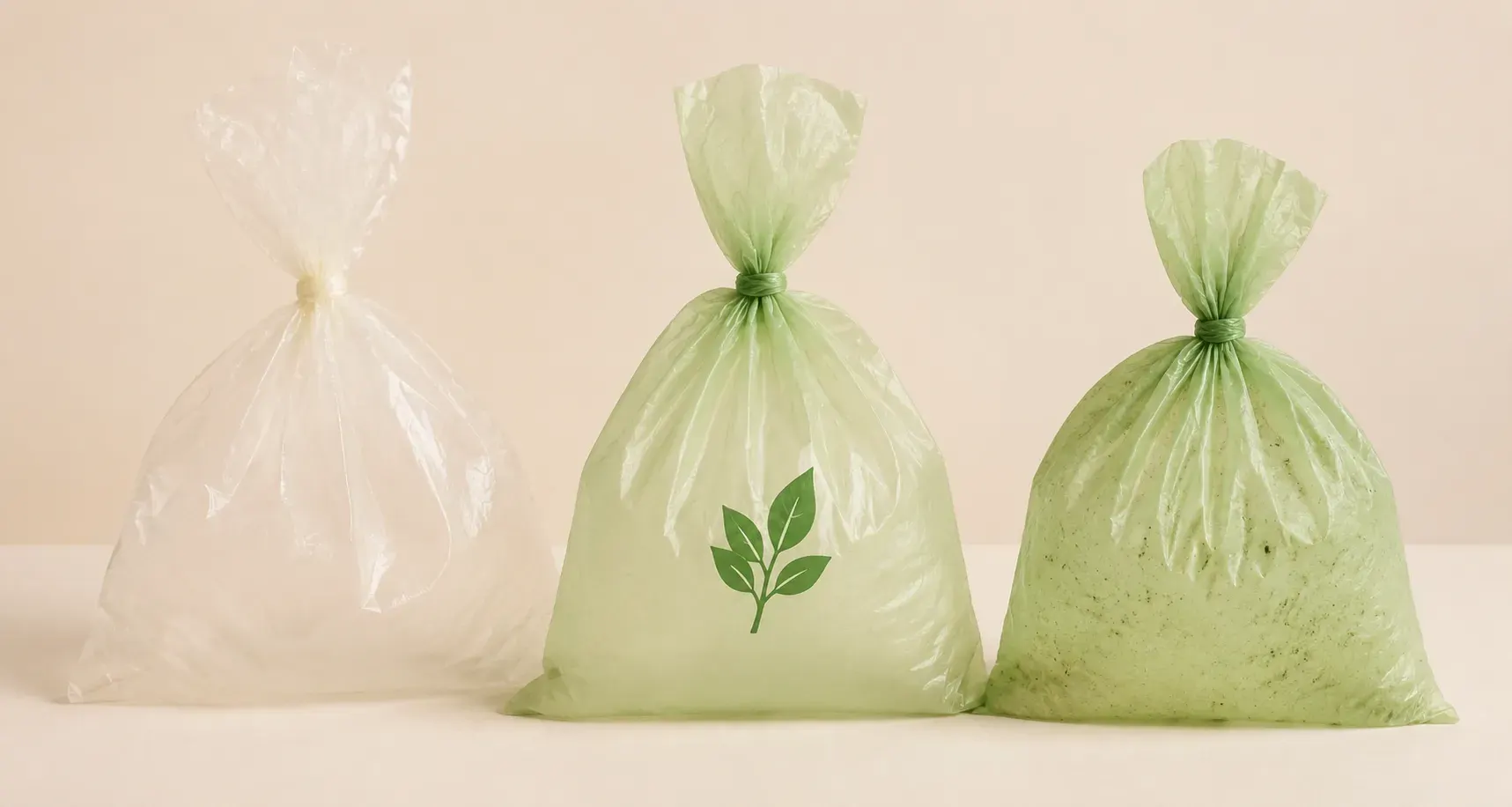
Recycled-content polyethylene, bio-based polymers, and certified compostable films can support different sustainability goals. These options should be judged by the finished bag, including inks, adhesives, zippers, coatings, and seals. A material’s origin does not by itself prove that the finished bag is recyclable or compostable in a specific local system.
| Material Family | Typical Strengths | Common Bag Directions |
|---|---|---|
| HDPE | Lightweight, stiff, moisture resistant | Produce, grocery, liners, lightweight retail |
| LDPE | Flexible, soft, sealable, impact tolerant | Food, garment, retail, general storage |
| LLDPE | Stretch, puncture resistance, toughness | Heavy liners, industrial packaging, durable film |
| PP | Clarity, stiffness, fatigue and chemical resistance | Display, food, woven, and selected retail bags |
| Multi-layer laminate | Barrier, print protection, tailored sealing | High-barrier food, aroma-sensitive, premium pouches |
What are the different types of plastic bags?
Plastic bags can be classified by shape, closure, filling method, product risk, and industry. The following formats cover common packaging requirements, but custom combinations are possible when the product needs a more specific structure.
Flat Plastic Bags
Flat bags have two primary film panels and no gusset. They are economical, easy to store, and suitable for documents, apparel, small products, food items, and protective overwrap. Depending on the format, they can be heat sealed, taped, stapled, tied, or supplied with an adhesive flap.
Markable and Header Bags
Markable bags include a write-on block for item identification. Header bags can include a hanging hole, die-cut handle, or card header for retail display. These features help organize small parts and improve presentation without changing the basic flexible-film structure.
Resealable and Ziplock Bags
Resealable bags use a zipper track, slider, adhesive flap, or another closure that permits repeated access. They are used for food storage, small components, samples, craft items, documents, and retail packaging. The closure should be selected according to how often the user will open the bag and how much pressure the product places on the seal.
Gusseted and Stand-Up Bags
Gusseted bags expand when filled, providing more usable volume without requiring a much wider flat package. Side-gusseted bags are common for bread, coffee, waste, retail, and industrial liners. Stand-up pouches combine a bottom structure with a flexible front and back panel so the package can sit upright for display and storage.
Anti-Static and ESD Bags
Anti-static bags reduce static attraction or buildup. ESD shielding bags provide a more specific level of protection for electronic components. Color is not a reliable substitute for a documented electrical performance requirement, so buyers should specify the desired resistance or shielding level.
Mailing and Shipping Bags
Poly mailers and shipping bags use lightweight, opaque, or printed film to protect garments, documents, e-commerce orders, and soft goods. Common features include permanent adhesive closures, tear strips, return strips, handles, tamper evidence, and multiple layers for improved puncture resistance.
Wicketed, Perforated, and Vented Bags
Wicketed bags are stacked on a header or wire wicket for rapid manual loading. Perforated or vented bags allow air exchange and may be used for produce, bakery products, or applications where condensation must be managed. Perforation size, pattern, and location affect both ventilation and product containment.
Tamper-Evident and Security Bags
Tamper-evident bags use a permanent adhesive seal, tear strip, or another feature that shows visible evidence if the package has been opened. They are used for documents, cash handling, controlled items, samples, and other products where access history matters.
Shrink, VCI, and Specialty Industrial Bags
Shrink bags tighten around a product when exposed to controlled heat. Vapor corrosion inhibitor bags protect selected metal parts from corrosion by creating a suitable enclosed environment. Other specialty bags may be made for cleanroom handling, hazardous material containment, pallet protection, oven use, or high-visibility waste segregation. Each specialty claim should be supported by the relevant material and test specification.
How Bag Geometry Changes Usable Capacity
A bag’s flat dimensions are not the same as its usable capacity. Side seals consume width, a zipper or adhesive flap consumes headspace, and a gusset only expands when the product can push the folds open. For a rigid or irregular product, the opening may be the limiting dimension even when the bag’s total volume appears sufficient.
For custom projects, measure both the product and the loading motion. A bag filled by hand may need a wider mouth than the same bag filled by a funnel. A bag loaded on an automatic line may need a specific coefficient of friction, wicket spacing, or opening stiffness. A stand-up pouch may need a bottom gusset that opens consistently rather than merely adding more flat film.
- Flat bags: efficient for thin products and overwrap but limited in volume.
- Side-gusseted bags: expand laterally and can fit wider products or higher fills.
- Bottom-gusseted pouches: can stand upright and provide a larger display face.
- Three-side-seal pouches: offer a broad front panel with a controlled top opening.
- Four-side-seal or quad-seal bags: provide a more structured format for heavier or premium goods.
Additives and Functional Film Treatments
| Feature or Additive | Purpose | When to Consider It |
|---|---|---|
| Anti-block | Helps film layers separate instead of sticking together | Small bags, automatic equipment, and high-speed packing |
| Slip additive | Adjusts surface friction and bag handling | Automatic feeding, stacking, and opening operations |
| Anti-static treatment | Reduces static attraction and charge buildup | Electronics, clean handling, dust-sensitive products |
| UV stabilizer | Slows UV-related film and print degradation | Outdoor storage, agriculture, landscaping, and long exposure |
| Perforation or venting | Allows controlled air exchange | Produce, bakery, warm products, and condensation control |
| Tear notch or easy-open feature | Improves consumer access without tools | Retail products, mailers, and tamper-evident formats |
Common Plastic Bag Specification Mistakes
Using “Plastic” as the Complete Material Description
Polyethylene is the most common material family because it offers a broad combination of flexibility, moisture resistance, sealability, processability, and cost efficiency. The appropriate density or blend depends on the bag’s application.
Treating Thickness as the Only Measure of Strength
Not always. Thickness is important, but resin selection, film orientation, additives, seal geometry, and bag construction also affect strength. A well-designed thinner bag can outperform a thicker bag made from an unsuitable material.
Making a Recycling Claim Without Checking the Finished Bag
Some plastic bags and films can be recycled through designated collection or processing systems, but acceptance varies by material, contamination, construction, and location. Check the local program and the finished bag specification rather than assuming every flexible bag belongs in a curbside bin.
Using “Poly Bag” and “Plastic Bag” Without Confirming the Resin
Poly bag usually refers to a bag made from polyethylene film, while plastic bag is a broader term that can include polyethylene, polypropylene, PVC, laminates, and other polymer-based structures. In everyday purchasing language, the two terms are often used interchangeably, so the material specification should be confirmed.
Requesting a Custom Quote Without Application Data
Provide the product dimensions, weight, shape, filling method, closure, film material, thickness, color, transparency, printing, quantity, storage conditions, destination market, and required certificates. A product sample, drawing, or photographs of the current bag can help a manufacturer recommend a practical structure.
Conclusion: Plastic Bags as a Complete Packaging System
Plastic bags are not defined by one resin, one thickness, or one production method. Their performance comes from the relationship between the film, seal, closure, geometry, printing, handling process, and end use.
For a reliable result, start with the product and the risks it faces. Then select the material family, gauge, bag style, closure, and features that meet those conditions. Validate the finished bag with a sample and document the approved specification before placing a large order.
Mille Container supplies custom plastic packaging bags, food packaging bags, mailing and shipping bags, industrial plastic bags, printed films, resealable bags, and other flexible packaging formats. The goal is not simply to produce a bag that looks right, but to build a packaging structure that performs consistently from filling through delivery.