
To tie a garbage bag securely, gather the top of the bag, remove excess air, twist the neck several times, and tie the drawstrings into a firm double knot. Leave enough space at the top so the plastic is not stretched, and handle sharp or heavy waste separately to reduce the risk of punctures and leaks.
A secure garbage bag tie does more than close the opening. It helps contain odors, prevents liquid from escaping, reduces shifting during transport, and makes it easier to carry the bag from the kitchen bin to an outdoor container, curb, or waste chute.
Key takeaways
- Use the bag’s drawstrings or tie-handles whenever available.
- Leave approximately 6 inches, or 15 cm, of space at the top.
- Press down gently to remove excess air before tying.
- Twist the gathered neck before securing the knot.
- Use a double knot for wet, dense, or heavy waste.
- Double-bag sharp, heavy, or particularly odorous contents.
- Choose a bag thickness and size that match the type of waste.
- Do not lift an overloaded bag only by thin drawstrings.
What You Need To Tie A Garbage Bag
You only need a suitable garbage bag and the household waste inside it. Bags with built-in drawstrings or tie-handles are generally easier to close because the handles provide a controlled grip and distribute tension around the opening.
For bags without drawstrings, the excess plastic at the top can be twisted and tied into a simple knot. The most important factor is not the knot style alone. The bag must have enough unused material above the waste to form a secure neck without excessive tension.
| Item | Purpose |
|---|---|
| Garbage bag | Holds household waste |
| Drawstrings or tie-handles | Close and secure the opening |
| Twist tie, string, or zip tie | Useful for overfilled or handle-free bags |
| Newspaper or paper towels | Help wrap sharp objects or absorb small amounts of moisture |
| Second bag | Adds protection for dense, wet, or sharp waste |
Before tying, check the bag for visible tears, thin spots, or liquid collecting at the bottom. A knot cannot compensate for a bag that is too small, overloaded, or damaged.
The Standard Method: How To Tie A Garbage Bag With Drawstrings
The most reliable way to tie a garbage bag with drawstrings is to gather the opening, twist the neck, and finish with a firm double knot. This method works well for kitchen trash, bathroom waste, office waste, and most everyday household loads.
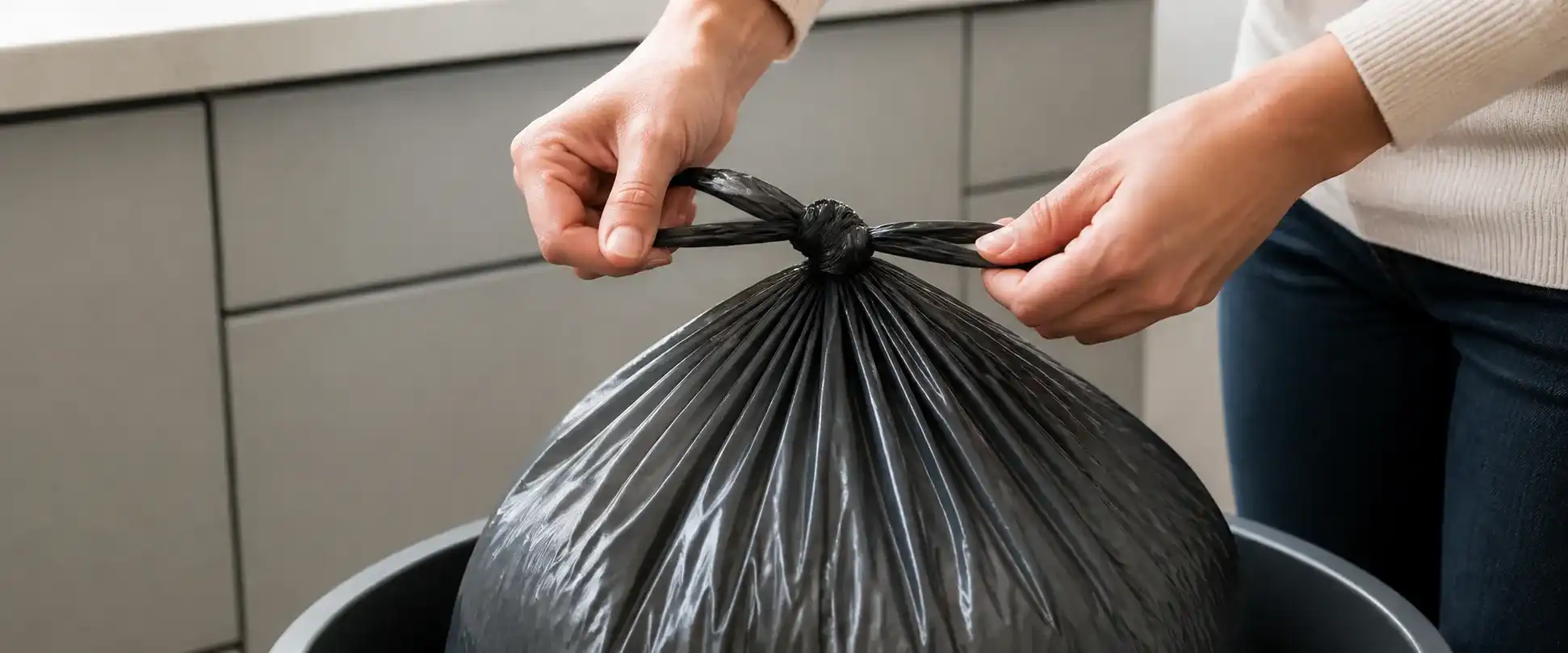
Step 1: Lift And Gather The Bag
Remove the bag from the bin by holding the sides near the rim rather than pulling sharply on one handle. Keep the bag upright while lifting it, especially when it contains food scraps, coffee grounds, cleaning materials, or other wet waste.
Bring the loose plastic above the contents together with both drawstrings. Form one narrow neck instead of allowing the opening to remain wide and loose. Gathering the top removes slack and helps keep the contents below the closure point.
If the bag is close to full, do not force it out of the bin. Press the contents down gently only if the waste is safe to handle, then make sure there is still enough plastic available to close the bag. A stretched opening is more likely to tear when you pull the drawstrings.
Step 2: Remove Excess Air
Before tying, press the bag down gently around the upper layer of waste to release trapped air. Keep your hands away from sharp edges, broken containers, exposed cans, and unknown materials.
Removing excess air makes the package narrower and easier to transport. It also reduces pressure against the closure. However, do not squeeze a bag containing liquid so forcefully that the liquid is pushed through a weak seam or puncture.
For food waste and other odor-producing materials, reducing air helps the tied bag occupy less space. The main odor-control measure is still prompt disposal and a properly closed bag. A knot can contain odors temporarily, but it cannot replace regular bin cleaning or timely waste collection.
Step 3: Twist The Gathered Neck
Hold the gathered plastic below the drawstrings and twist it several times. Continue until the neck becomes firm and the plastic sits closely around the contents.
This twisted section functions like a compact barrier. It reduces the chance that waste will shift upward and push against the knot during carrying. It also gives the drawstrings a stable section to secure.
Do not twist so aggressively that the plastic becomes visibly stretched, whitened, or close to tearing. The correct amount of tension is firm but controlled. If the material feels brittle or thin, use a second bag or transfer the contents to a larger, stronger bag.
Step 4: Tie A Firm Double Knot
Cross the drawstrings and tie the first knot close to the twisted neck. Pull the strings evenly until the opening is closed, then make a second knot over the first.
A double knot is suitable for ordinary household waste and provides more security than a loose single knot. Avoid tying the knot at the very ends of long handles, where it may slide or become difficult to tighten.
For a heavy or wet bag, keep one hand on the twisted neck while tightening the drawstrings with the other. This prevents the gathered plastic from unwinding before the knot is complete.
Step 5: Check The Closure
Inspect the tied opening before carrying the bag. The knot should be tight, the neck should remain twisted, and no waste should be pressing directly against the closure.
Lift the bag using the gathered body or support it from underneath. Do not rely on a thin drawstring alone when the bag is heavy. If the knot loosens, retie it closer to the bag opening or use an additional tie.
| Check | What to look for |
|---|---|
| Knot | Firm and not sliding open |
| Neck | Twisted and gathered |
| Top space | Enough plastic remains for closure |
| Bag surface | No visible stretching or punctures |
| Bottom | No liquid escaping or collecting underneath |
How To Tie A Garbage Bag Without Drawstrings
To tie a garbage bag without drawstrings, twist the entire gathered top into a tight rope, bend it into a loop, and pass the end through the loop. Pull the knot firmly while supporting the bag from underneath.
1. Gather And Twist The Top
Hold the upper edges of the bag together and twist the plastic several times. Start near the contents and work upward, creating a long, narrow section of twisted plastic.
The aim is to make a stable rope-like neck. If the plastic is spread across a wide opening, the knot will be loose and difficult to tighten. If the bag contains wet waste, keep it upright and avoid squeezing the lower portion.
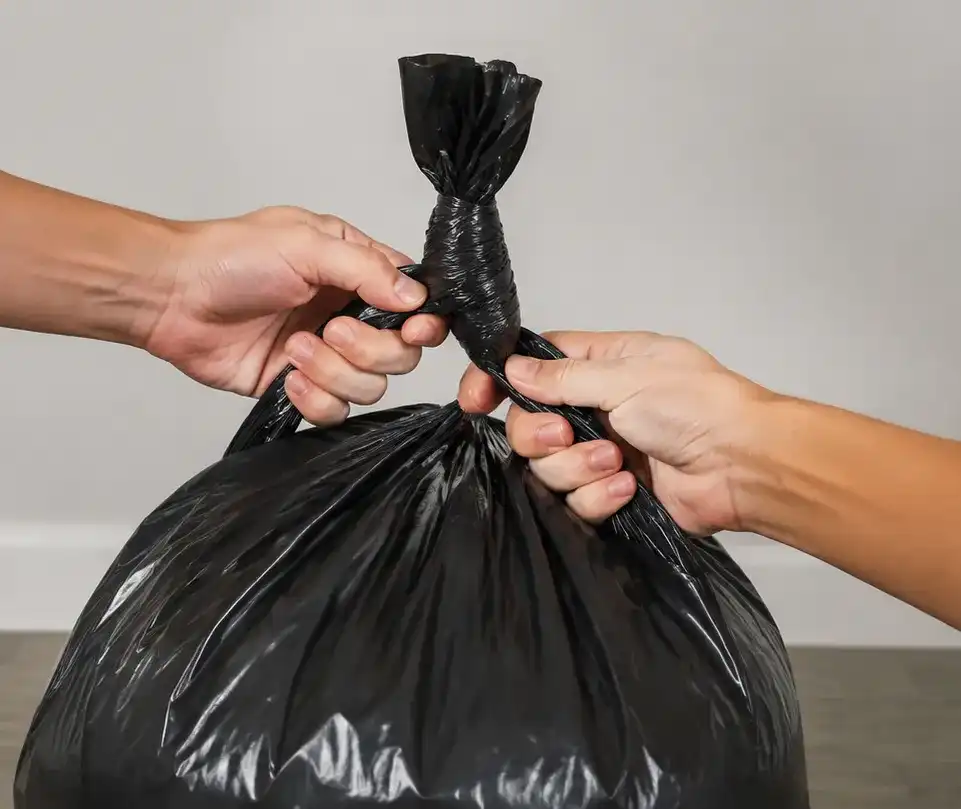
2. Form And Tighten The Knot
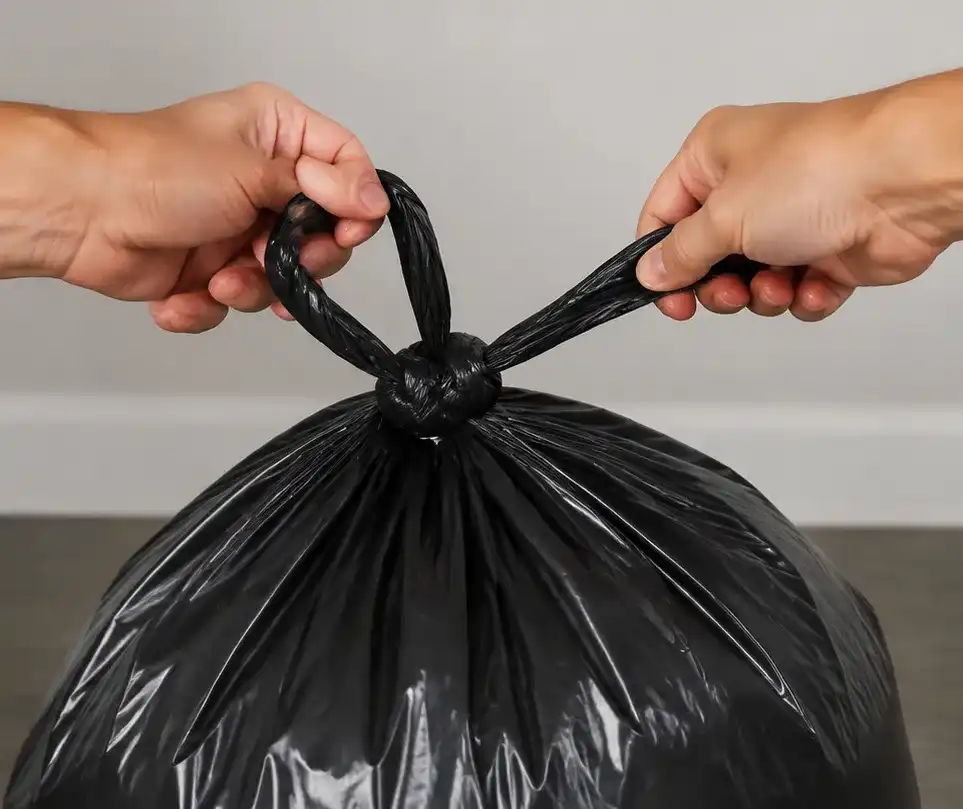
Bend the twisted neck to create a loop. Pass the free end of the twisted plastic through the loop, then pull it tight. This forms a simple self-tightening knot using the bag material itself.
If enough plastic remains, make a second knot over the first. For a large bag without handles, you can also secure the twisted neck with a twist tie, piece of string, or reusable strap. Do not use a sharp wire or material that may cut through the bag during transport.
How To Tie A Garbage Bag That Is Too Full
A garbage bag that is too full should not be forced closed by pulling hard on the handles. Press down carefully if the contents are safe, gather the excess plastic over the waste, and use an external tie when the built-in handles do not provide enough length.
1. Settle The Contents Carefully
First, assess what is inside the bag. Do not press down on broken glass, exposed metal, sharp bones, chemicals, or other hazardous materials. If the bag is already stretched tightly, moving the contents may cause a seam or sidewall to split.
For ordinary soft waste, gently press down to remove air pockets and create a small amount of room. This should not be treated as a way to add more waste. An overfilled bag remains more likely to tear, leak, or become difficult to lift.
2. Gather The Excess Plastic
Bring the sides of the bag upward and over the contents, similar to wrapping a package. Gather all available plastic at one point and twist it into a firm neck.
If the opening cannot be gathered without excessive tension, stop and use a larger bag. A closure that looks tight but is pulling against a stretched sidewall is not secure.
3. Use An External Tie
When the drawstrings are too short, use a suitable twist tie, zip tie, cord, or piece of string to secure the gathered neck. Place the external tie below the stretched area and tighten it evenly.
For wet or heavy waste, place the first bag inside a second bag before sealing if the outer bag is clean enough to handle. Double-bagging adds protection, but it does not make unsafe materials suitable for ordinary household disposal.
How To Tie A Heavy-Duty Trash Bag Securely
A heavy-duty trash bag should be tied with space at the top, supported from underneath during lifting, and double-bagged when the contents are sharp, dense, wet, or likely to puncture the material.
1. Do Not Overfill Heavy-Duty Bags
Heavy waste creates downward force as soon as the bag is lifted. Even a thick bag can tear when concrete fragments, tools, branches, cans, or other dense materials are packed too tightly.
Leave room above the contents and distribute the weight as evenly as possible. If the bag is too heavy to lift comfortably, divide the load into two or more bags. This reduces stress on the seams and improves handling safety.
2. Use A Second Bag For Sharp Or Dense Waste
Wrap sharp objects in sturdy paper or place them in a rigid container before putting them into a garbage bag. Broken glass and exposed metal should follow local disposal rules and should not be handled like ordinary kitchen waste.
When additional protection is needed, place the first closed bag inside a second bag. Tie the inner bag before inserting it into the outer bag if the contents may shift. Then gather and close the outer bag separately.
3. Double-Knot And Support The Load
Use the gathered-neck method, followed by a firm double knot. Keep the twisted section inside the knot so it cannot unwind easily.
When moving the bag, hold the tied top only long enough to reposition it. Support the bottom with your other hand or use a bin, cart, or container. This reduces the chance of the bag opening or the drawstrings tearing away from the film.
Scenario Tweaks For Different Types Of Waste
Different household waste streams create different problems. Wet food waste requires better leak control, dense waste creates load stress, and odor-heavy waste needs prompt removal and a dependable closure.
1. Kitchen Wet Waste
For meat packaging, food scraps, coffee grounds, and other wet waste, use the gooseneck twist before tying the bag. Place absorbent paper at the bottom of the next bag if local waste rules allow it and if the material is appropriate for your disposal system.
Do not put free liquid into a household garbage bag. Drain liquids separately where permitted, or use a sealed container for liquid waste. A garbage bag is designed to hold solid waste and incidental moisture, not a large volume of loose liquid.
2. Cat Litter And Diapers
Cat litter and used diapers are dense, and both can produce strong odors. Use a bag with enough load capacity, avoid filling it to the point of strain, and tie it promptly after adding the waste.
Double-bagging can reduce the consequences of a puncture or weak seam. For small daily quantities, a separate liner bag may be easier to close and remove than placing all odor-heavy material into one large bag.
3. Summer Wheelie Bins
Warm weather speeds up decomposition and can intensify odors inside an outdoor wheelie bin. Tie the bag tightly, keep the bin away from direct sunlight where possible, and follow the local collection schedule.
Do not store waste bags in areas exposed to excessive heat if the material may soften or if the contents could ferment and build pressure. Keep the bin lid closed, but avoid packing bags so tightly that they become difficult to remove.
Choosing The Right Garbage Bag For Secure Tying
A reliable closure starts with selecting a bag that matches the waste type and load. Size, film thickness, seam quality, and handle design all affect how well a garbage bag performs during filling, tying, and transport.
| Use case | Recommended bag characteristics |
|---|---|
| Kitchen waste | Medium or large size, leak-resistant film, drawstring handles |
| Bathroom waste | Small to medium size, easy-to-tie opening |
| Food scraps | Strong seams, suitable liner, frequent removal |
| Yard waste | Larger capacity, durable film, reinforced construction |
| Heavy or sharp waste | Heavy-duty film, extra top space, possible double-bagging |
| Office waste | Lightweight film may be sufficient if contents are dry |
Bag thickness is commonly measured in mils, with one mil equal to one-thousandth of an inch. Thickness alone does not determine performance. Resin quality, film structure, seam construction, puncture resistance, bag dimensions, and the shape of the waste also matter.
As a packaging bag manufacturer, Millecontainer focuses on matching bag construction to the intended application. For household and commercial use, the practical goal is a bag that offers dependable handling, suitable strength, and a closure system that works with the user’s routine.
Common Mistakes To Avoid When Tying Trash Bags
Most garbage bag failures come from overfilling, sharp contents, weak closure technique, or choosing a bag that is too small for the job. Correcting these factors is more effective than relying on a complicated knot.
1. Tying The Knot Too Loosely
A loose knot may open when the waste shifts or when the bag is placed into an outdoor container. Pull the drawstrings evenly and complete a second knot while keeping the neck gathered.
Do not pull only one handle at an extreme angle. Uneven force can tear the handle area or make one side of the opening tighter than the other.
2. Leaving Too Much Air Inside
A large air pocket makes the bag harder to carry and increases the pressure inside the package. Press down gently on safe, soft contents before tying.
Do not remove air by aggressively squeezing bags that contain liquid, sharp objects, or unknown waste. In those situations, prioritize safe handling and use an appropriate secondary container.
3. Skipping The Neck Twist
Tying the handles without twisting the gathered neck leaves more room for the contents to move toward the opening. The twist stabilizes the neck and helps the final knot stay in position.
For dry, lightweight waste, a simple handle knot may be enough. For wet, dense, or odor-producing waste, twisting the neck is a more dependable habit.
4. Overfilling The Bag
Leave approximately 6 inches, or 15 cm, of space at the top whenever possible. The bag should close without stretching the film or forcing the seams apart.
If the contents reach the rim, divide the waste into two bags or use a larger size. The cost of an additional bag is usually lower than the cost of cleaning a leak or replacing a torn liner.
5. Ignoring Sharp Objects
Bones, broken glass, cans, and rigid plastic can puncture the sidewall or bottom. Wrap sharp edges or place the item in a rigid container according to local disposal guidance.
Never place hazardous materials, batteries, medical sharps, chemicals, or other restricted waste into a regular household garbage bag unless local regulations specifically allow it.
6. Forgetting To Clean The Bin
A new liner cannot remove dried liquid or residue from the bottom of the bin. Empty and wash the bin regularly with soapy water, then use an appropriate disinfecting product according to its label.
Allow the bin to dry before inserting a new bag. Moisture trapped between the bin and liner can contribute to odors and make small leaks more difficult to notice.
How To Prevent Garbage Bag Leaks And Odors
A tight tie helps contain waste, but leak prevention also depends on the bag’s condition, the type of waste, and how the bin is maintained. Use a correctly sized bag, keep liquids out of ordinary liners, and remove odor-heavy waste before it sits for long periods.
For kitchen waste, place food scraps in a smaller liner and empty it frequently. Paper towels or newspaper may absorb incidental moisture, but they should not be treated as a solution for large amounts of liquid. When leakage is a recurring problem, choose a bag with stronger film and seams rather than simply tying the same thin bag more tightly.
Odor control also depends on ventilation and cleaning. Keep the bin lid closed, wash the interior regularly, and avoid leaving warm food waste in the bag for extended periods. A secure knot limits odor release during transport, but it does not stop decomposition inside the bag.
Frequently Asked Questions
Q.
What Is The Best Knot For A Garbage Bag?
A.
The best practical method is a gathered neck, several twists, and a firm double knot using the drawstrings or excess plastic. This combination keeps the opening closed and limits movement inside the bag.
Q.
How Do You Tie A Garbage Bag Without Handles?
A.
Twist the gathered top into a tight rope, bend it into a loop, and pass the end through the loop. Pull the knot firmly and add a second tie if the bag is heavy or wet.
Q.
How Do You Keep A Garbage Bag From Falling Into The Bin?
A.
Use a bag that fits the bin’s capacity and stretch the top edge over the rim before adding waste. Bags with elastic edges, drawstrings, or tie-handles generally stay in place more reliably than undersized flat bags.
Q.
Why Does My Garbage Bag Keep Leaking?
A.
Common causes include sharp objects, overloaded contents, weak seams, excessive liquid, or a bag that is too small. Use a stronger or larger bag, remove free liquid, and wrap sharp items before disposal.
Q.
Should You Double-Bag Wet Garbage?
A.
Double-bagging is useful for dense, wet, or puncture-prone waste when an additional barrier is appropriate. It does not replace safe disposal procedures or make hazardous waste suitable for a standard trash liner.
Q.
How Full Should A Garbage Bag Be Before Tying?
A.
Tie the bag before it is stretched tightly against the rim. Leave enough top material to gather and close the opening, generally around 6 inches or 15 cm for a standard household bag.
Q.
Can You Tie A Garbage Bag With A Twist Tie?
A.
Yes. A twist tie can secure a bag without drawstrings or reinforce a closure when the bag is heavy. Place it around the gathered neck and check that it does not cut into or puncture the plastic.
Q.
Is It Safe To Lift A Full Trash Bag By The Drawstrings?
A.
For a light bag, the drawstrings may provide adequate control. For a heavy bag, support the bottom with your other hand or use a cart. Lifting only by the drawstrings can tear the handle area and cause the bag to fall.
Conclusion
Tying a garbage bag correctly takes only a few seconds: gather the opening, remove excess air, twist the neck, and secure it with a firm double knot. Leave room at the top, avoid free liquids and sharp edges, and choose a bag designed for the weight and type of waste you handle. These steps help reduce leaks, odors, torn liners, and difficult trips to the curb or waste chute.
The bag itself remains the final barrier between household waste and the surrounding area. Millecontainer manufactures packaging bags for different applications, including options designed around size, film strength, seam performance, and closure requirements. Contact Millecontainer to discuss the bag specifications that best fit your household, commercial, food-service, or waste-handling needs.